>

As a part of our Empower Andean arts campaign, we have chosen to interview a few local artists in Cusco to understand what Andean art means to them. Today, we have met up with Joan, a music artist here in Cusco.


Can you please introduce yourself and the art? 

“My name is Joan. I’m from Cusco, and my art is music in general and writing and researching.” 

And what type of music is it? 

“Well, now I’m doing more Andean music, and researching and learning more about it.”

What inspired you to learn about Andean music?  

“Well, really, I didn’t know a lot about Andean music before, because I was in another kind of music, more like rock, electronic music. 

And then, during the pandemic, I was in Urubamba, in the Sacred Valley, and I started to go in with a group of panflutes, named Sikuris. So from then, I think I started to be more interested in Andean music.  

I grew up always with this kind of music, but I never understood it.  But now, recently, I’m trying to discover new things that I didn’t know about music in general.”

And what is the type of instrument that you play? 

“I play more strings, like guitar, charango, and mandolina.  And then I play some winds, panflutes,and quena (Andean wind instrument). And before this, I play electronic music too computer too.”

Oh, wow, that’s very interesting. 

“But now I’m doing more acoustic, like with the strings and winds. 

And with those acoustic instruments, are they traditional Peruvian instruments? 

The strings are not, they are brought from Spain.

But the Andean culture, they, how do you say this? They accept them, and they put it in the music, Andean music too.

But the winds like the panflutes, of course, they are native from here.”

What challenges do you think you face in keeping those traditional instruments and traditional folklore music alive in a world that is rapidly modernizing? 

“So the Andean music is really big, but we can divide it in two. One is like the more commercial music. And the other one is native or the more original music. 

So the difference is really clear because in commercial music, this kind of music has more like melody, harmony or mystic sounds. That there is nothing wrong with

And the other kind of music, the native, more deep in the Andes, is not always melodic. It’s very high sometimes, and it’s different. Some people would say it is dissonant.

It was a challenge for me to figure out how to enjoy this music at first because it’s so different. But right now we are researching a lot of things that we didn’t previously know a lot about. But communities have always been exposed to this type of music, and some are heirs to this musical tradition.

The challenge would be to learn how to listen more to this music and enjoy it, or as some say decolonize your ear.”

Did those traditional folklore music teach you anything that you didn’t know about the Andean culture, history, or identity? 

“Yeah, of course. The heart of the Andean music is the panflutes. But we call it Sikuri, it’s the name in Puquina. Puquina is an ancient name before Quechua and other languages. So I think everything about Andean music is in the panflutes.  

The planflutes taught me what it really means to play Andean music. So the world of the panflutes, there are hundreds of styles, it’s a whole universe, the panflutes. When you play panflutes, you don’t have to play it alone, you have to play it with someone.”

Oh, okay. So it’s like a community music.

“Yeah, like all the Andean world it’s very important to play it in the community, and not to be alone. So the goal of this kind of music, of the panflutes, is not only to make beautiful music, It’s also  the social integration. Even when you go to the communities, you can see little children playing it.

When you play panflutes, there is one that has to ask, and the other one has to do the answer. So it’s a conversation. Of two first, and then can be four, and then can be six, twenty. You know, it’s like how the universe works with cooperation. We call it in Quechua, we say Yanantin.”

And in that music, does it normally tell a story? Or does the music itself mean anything? 

“Yes, there are like 100 or more styles, depending on the community.

So each community plays a different style.  For example, here in Cusco, close to Cusco, in Chumbivilcas, we have one group, we call Ayarachis.

For example, they play it in rituals for the dead. 

 In other parts of Peru and South America, they play it for other intentions too like agriculture.

For example, in Puno, in Taquile, one island, they play it in a special time for seasonal change and fertility.  And after they play it, they break the panflutes. They destroy them.  It’s like some sort of connection with the moon, with the sun, and the field, and the territory, and the person, and the changes. So it was more for this kind of sacred ritual.”

In terms of commercialization, do you think that music is at risk of losing its identity? 

“Not really, I don’t think so. I think there is an essence that we are not losing. For example, these things, playing together, playing in community, playing in cooperation, and other things about more musical things.  So would you say that commercialization has no effect?  Yeah, it has.

 I say that the Andean music is changing but we are not losing the core. But of course, modernization sometimes can take off this essence and make it like a product. In any case, it is adapting to modernization, the question is not to lose that Andean logic.”

Versión en español

¿Podrías presentarte a ti mismo y a tu rate?

“Mi nombre es Joan. Soy de Cusco, y mi arte es la música en general y escribir a veces, investigando.”

¿Y qué tipo de música es?

“Bueno, ahora estoy haciendo más música andina, e investigando y aprendiendo más de ella.”

¿Qué te inspiró a aprender sobre la música andina?

“Bueno, en realidad, antes no sabía mucho sobre la música andina, porque yo estaba en otro género musical, más como rock, música electrónica.

Luego, durante la pandemia, estuve en Urubamba, en el Valle Sagrado, en donde empecé a  entrar con un grupo de músicos que tocan la zampoñas, llamado Sikuris. A partir de entonces, creo que empecé a interesarme más por la música andina.

Crecí siempre con este tipo de música, pero nunca la entendí.  Pero ahora, desde hace poco, intento descubrir cosas nuevas que no sabía sobre la música en general.”

¿Y qué tipo de instrumento tocas?

“Toco más cuerdas, como guitarra, charango y mandolina.  Y luego toco algunos instrumentos de viento, zampoñas y quena (instrumento de viento andino). Además, también toco música electrónica por ordenador.”

Vaya, eso es muy interesante.

“Pero ahora hago música más acústica, como con las cuerdas y los vientos.”

Y con esos instrumentos acústicos, ¿son instrumentos tradicionales peruanos?

“Las cuerdas no, son traídas de España. Pero la cultura andina los acepta y los hace parte de su música. Pero los vientos como las zampoñas, por supuesto, son nativos de aquí.”

¿A qué retos cree que se enfrenta para mantener vivos esos instrumentos tradicionales y la música folclórica tradicional en un mundo que se moderniza rápidamente?

“La música andina es muy grande, pero podemos dividirla en dos. Una es la música más comercial. Y la otra es la música nativa o más original. Así que la diferencia es muy clara porque en la música comercial, este tipo de música tiene más como melodía, armonía o sonidos místicos.Que no tiene nada de malo.

Y el otro tipo de música, la nativa, más profunda en los Andes, no es tan melódica. A veces es muy aguda, y es different. Para mí fue un reto descubrir cómo disfrutar de esta música al principio, porque es muy diferente. Pero ahora estamos investigando muchas cosas de las que antes no sabíamos. Llas comunidades siempre han estado expuestas a este tipo de música, y algunos son herederos de esta tradicion musical

El reto seria aprender a ecuchar mas esta musica  y disfrutar, o como dicen algunos descolonizar tu oido.”

¿Le enseñaron esas músicas folclóricas tradicionales algo que no supiera sobre la cultura, la historia o la identidad andinas?

“Sí, por supuesto. El corazón de la música andina para mi son las zampoñas. Pero nosotros lo llamamos Sikuri, es el nombre en Pukina. Pukina es un nombre antiguo anterior al quechua y a otras lenguas. Así que creo que todo sobre la música andina está en las zampoñas.

Las zampoñas me enseñaron lo que realmente significa tocar música andina. Es todo un universo. Cuando tocas las zampoñas, no tienes que hacerlo solo, tienes que hacerlo con alguien.”

 Ah, vale. Así que es como una música comunitaria.

“Sí, como en todo el mundo andino es muy importante tocarla en comunidad, y no estar solo. Así que el objetivo de este tipo de música, de las zampoñas, no es solo hacer música hermosa, es tambien la integración social. Incluso cuando vas a las comunidades, puedes ver a niños pequeños tocándola.

Cuando tocas la flauta de pan, uno tiene que preguntar y el otro tiene que responder. Así que es como una conversación. De dos primero, y luego pueden ser cuatro, y luego pueden ser seis, veinte. Es como funciona el universo con la cooperación. En quechua, decimos Yanantin.”

Y en esa música, ¿normalmente cuenta una historia? ¿O la música en sí significa algo?

“Sí, hay como 100 estilos o más, dependiendo de la Comunidad. Entonces cada comunidad toca un estilo diferente.  Por ejemplo, cerca de Cusco, en Chumbivilcas, tenemos un grupo, que se llaman Ayarachis.

Por ejemplo, lo tocan en rituales para los muertos. En otras partes de Perú y Sudamérica, lo tocan también para otras intenciones como la agricultura.

Por ejemplo, en Puno, en Taquile, una isla, lo tocan en un tiempo especial para el cambio estacional y la fertilidad.  Y después de tocarlo, destruyen los instrumentos. Es como una especie de conexión con la luna, con el sol, y el campo, y el territorio, y la persona, y los cambios. Así que era más para este tipo de ritual sagrado.”

En términos de comercialización, ¿cree que la música corre el riesgo de perder su identidad?

“La verdad es que no, no lo creo. Creo que hay una esencia que no estamos perdiendo. Por ejemplo, estas cosas, tocar juntos, tocar en comunidad y tocar en cooperación.  Entonces, ¿diría que la comercialización no tiene ningún efecto?  Sí, lo tiene.

Yo digo que la música andina está cambiando pero no estamos perdiendo el núcleo. Pero claro, la modernización a veces puede quitar esa esencia y convertirla en un producto. En todo caso se esta adaptando a la modernizacion, la cuestion es no perder esa logica andina.”
A Week in the life of a Cusco Volunteer

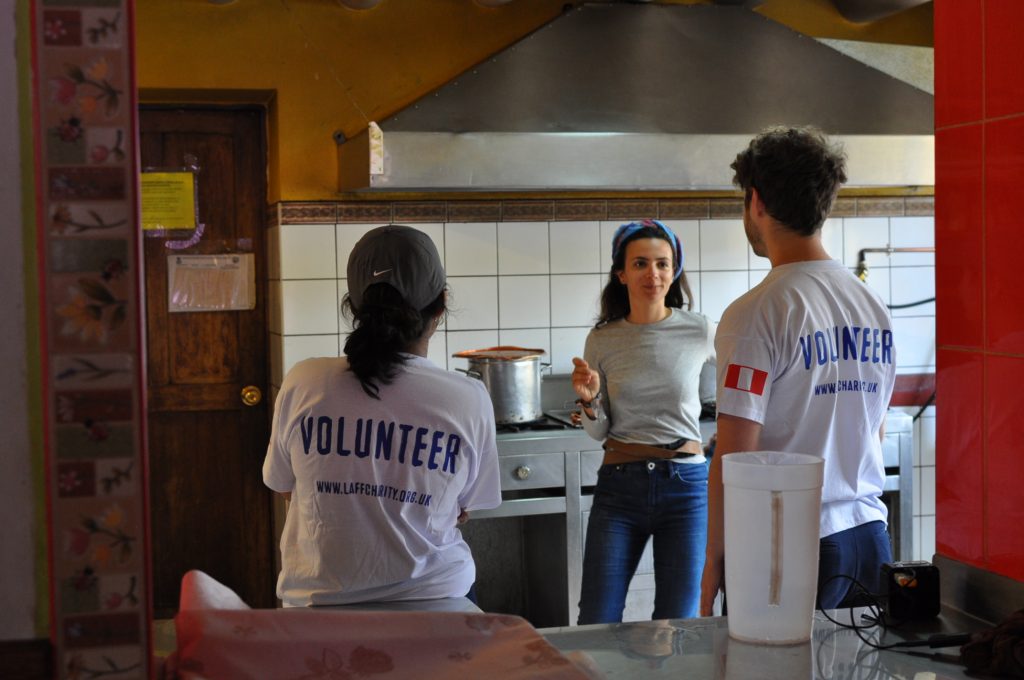
laff volunteers

Like so many organisations LAFF is delighted to be able to welcome volunteers back in person to Cusco, after almost two years of operating online. With the arrival of Alma, as project manager, LAFF resumed its in-person activities. 

Life in Cusco can only be described as magical. Every day starts with a trip to the local San Blas market where we pick up freshly pressed ‘combinado’ juice from our favourite juice lady! Sometimes we pick up a bakery item from the local ‘panaderia’ as we make our way to the office, in Zaguan del Cielo, to begin the day of work. 

Twice a week in the office we have team meetings to update each other on what we are all working on so everyone knows what is going on! Most days we are based in the office to work, but sometimes we also work from home if it is more convenient. This allows us to explore the Cusco cafe scene too – which I have to say is impressive! A personal favourite is Cappuccino Cafe which overlooks the Plaza de Armas and makes for a very photogenic view of the famous square! It is also a great spot to soak up some of the Peruvian sun… 

But on days when we work in the office, we normally take a break for lunch at around 1 PM and we all go for a team lunch at the local restaurant serving the 9 soles ‘menu del dia’ or for a change of scenery, we also have some other favoured lunch locations in the local area including the falafel from a popular vegetarian gem or Ceviche stand at the San Blas market. Sometimes we also pay a visit to our favourite ‘tienda de galletas’ for dessert…. 

After lunch, we return to the office until about 5:30-6:30 to continue working on the current projects. These might include fundraising projects, arranging collaborations with local organisations to improve the personal development of the projects we support, working on social media or recruitment and so much more….

One of the best things about Cusco is that there is so much to do. It is almost impossible to run out of new places to explore. So in the evenings after work, we often go and explore the vast array of bohemian bars that are scattered around the meandering cobbled streets of the old town. A highlight is that many bars offer free salsa lessons… which is a great way to let your hair down and immerse yourself in local Peruvian culture after work. On other days, it can be just as relaxing to watch the sun setting over the dramatic mountains that act as the awe-inspiring backdrop of Cusco at one of the viewpoints around the city. 

`Every few weeks we also try to make sure that we visit our partners which usually involves catching a ‘collectivo’ to the projects, taking meetings, observing a workshop going on or catching up on any news. Many of the projects are situated outside of the centre of Cusco which means the journeys provide some extraordinary views of the Sacred Valley. It is always great to see first-hand how important LAFF’s work is to improve the access to education of these young people. 

The weekends are opportunities for volunteers to take day trips outside of the city if they wish. Examples of the many day trips possible include exploring local Inca ruins or Machu Picchu, visiting the chocolate and coca museums, going to the salt mines or exploring the Sacred Valley. One of the many selling points of Cusco is that you can live in a beautiful city but also be out in the countryside and explore nature within an hour. Equally, Cusco is well connected to other local cities in Peru and Bolivia so weekend trips to Arequipa (Peru’s white city), Lake Titicaca or Copacabana are all very easy.

Volunteering in Cusco is a truly enriching experience. The work is exceptionally fulfilling whilst being sustainable. Being situated in Cusco gives volunteers a launchpad to explore Peru whilst also immersing themselves in local culture in the city that was once the heart of the Inca empire. 

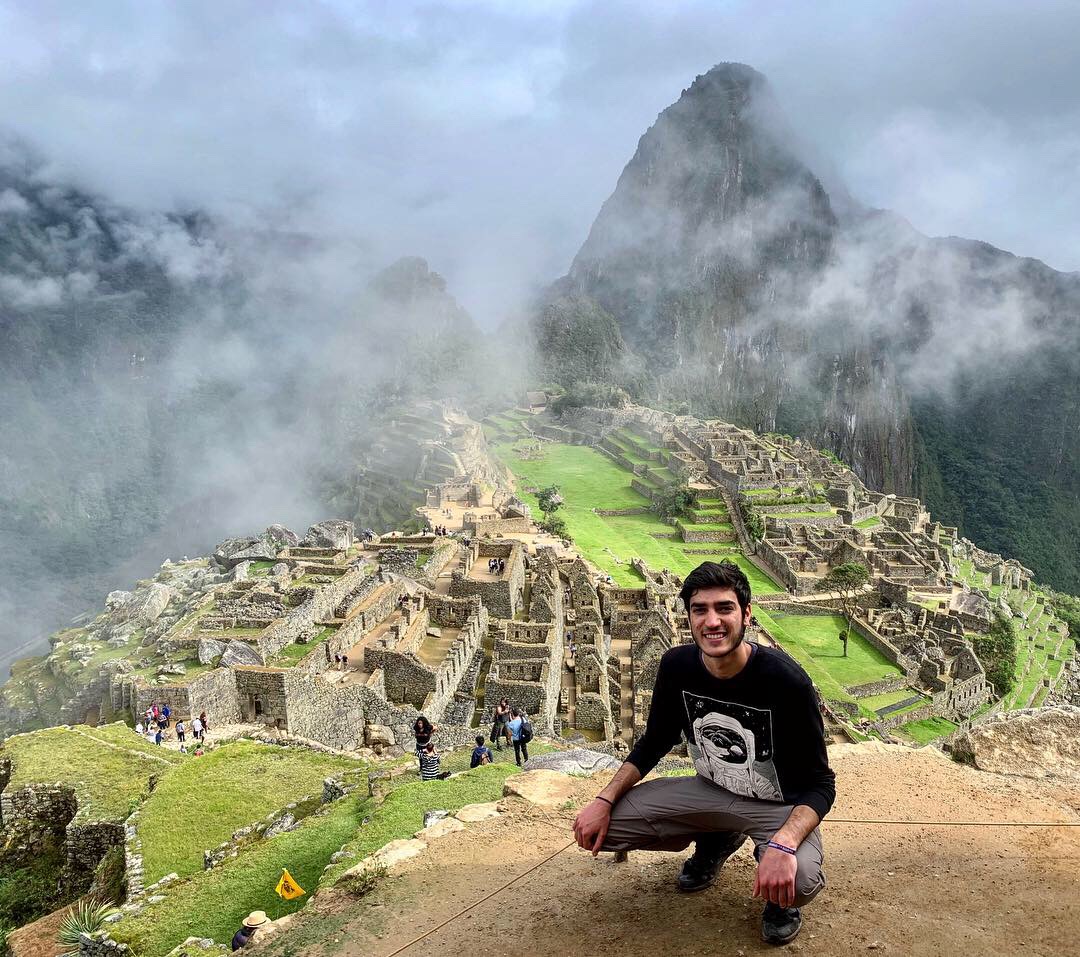
What is the first thing everyone thinks about when talking about Peru? Obviously, Machu Picchu. Among the numerous volunteer opportunities that it’s possible to undertake all over the world, many people, including me, end up coming to Peru, especially to Cusco, because of its historical sites. Among them, Machu Picchu is by far the leading one.

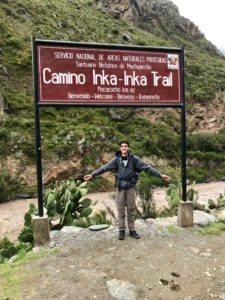
The trail’s start at Km 82 in Ollantaytambo

One thing I’ve been told since my first days in Cusco is that, no matter how I was going to visit it, it was going to be my most expensive trip. When I began reading about the different options, I soon realised that they were right: visiting this world’s wonder is definitely pricey! 

‘That’s fine’ – I told myself – ‘that’s what I save my money for!’, and after reading about all the treks that lead to Machu Picchu, I decided that I wanted to do the famous Inca Trail, the original trail created by the Incas hundreds of years ago and forgotten for many centuries until 1915, when it was rediscovered by the historian Hiram Bingham.

Reasonably enough, however, the Peruvian government has now established a limit to the daily permits to hike along the Inca Trail, precisely 500, of which ‘only’ 200 for hikers and the rests for porters and guides. Consequently, it is necessary to book a spot with months or even a year in advance, according to the season. Even though I was initially hopeless of finding a spot, I luckily managed to save mine with only three weeks of anticipation, so off I went!

The “Classic Inca Trail” is a 45km trek that winds through the Inca countryside, combining beautiful mountain scenery, subtropical jungle and fascinating archeological sites. Under my point of view, the latter is what makes this trek different from all the other options leading to Machu Picchu. In fact, while the beautiful scenery is a common feature of many hikes and treks throughout all Peru, during the Camino Inca you pass through the incredible Inca ruins of Llachtapata, Runkurakay, Sayacmarca, Phuypatamarca and Wiñaywayna, arriving at Machu Picchu for sunrise on the fourth day. The closer I got to the destination, the more I admired how developed and amazing the ruins were, where the Incas applied their best architectonic and engineering skills. As a matter of fact, everything they built was a practice to make Machu Picchu, their final masterpiece, perfect.

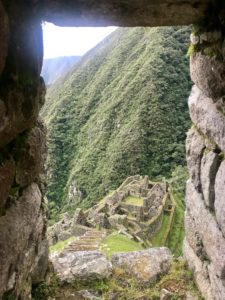
The wonderful Winaywaina archeological site

My group was composed of 7 young and committed people, plus a great (and quite rare, in a country that still has a strong macho culture like Peru!) female guide and 8 porters, led by the chef. The team who accompanied us throughout the hike delighted us with the greatest food I’ve had in 4 months here, and interesting – and quite scary – myths about the Inca Trail. Indeed, the Incas believed that the mountains were holy, and probably along the route of pilgrimage the Incas performed religious ceremonies and rituals to honour the sacred peaks. At the beginning of our trek, we have been asked by our guide to carry one little stone that we gave back at the Sun Gate to Machu Picchu on the last day together with three coca leaves, making our offer to the Pachamama: Mother Earth and fertility goddess.

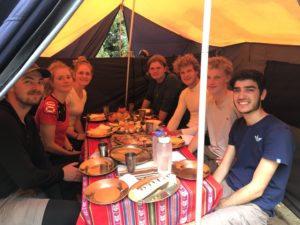
Ready for another delicious dinner

The Inca Trail is certainly a life adventure: there are other more affordable, faster and easier options to visit Machu Picchu, but few things match the sensation of walking over the ridge that leads to the Lost City of the Inca just at the sunset. Most travellers who arrive via the Inca Trail wouldn’t have done it any other way, and I’m certainly one of them. Also, you feel a kind of pride when the last day and you can recognise yourself and your fellow trekkers from the ‘normal’ daily tourists only by the awful smell! Nevertheless, it is definitely the best trek I’ve done during my experience with LAFF in Peru, and I believe that everyone who has the possibility should do it, just remember to book in advance!

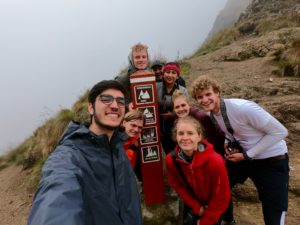
The ‘squad’ at the highest point of the trail: 4215 m!


If you are thinking about volunteering abroad and you also want to visit one the seven world’s wonders going through an amazing and historic Inca journey, visit our website or alternatively get in touch with us ([email protected]) to see how your skills could benefit us!

Trekking el camino Inca a Machu Picchu

¿Qué es lo primero que todos piensan cuando se habla de Perú? Obviamente, Machu Picchu. Entre las numerosas oportunidades de voluntariado que es posible emprender en el mundo, muchas personas, incluyéndome a mí, terminan viniendo a Perú, especialmente a Cusco, debido a sus sitios históricos. Entre ellos, Machu Picchu es por mucho el líder.

Inicio del camino en el km82 en Ollantaytambo

Una cosa que me han contado desde mis primeros días en Cusco es que, sin importar cómo lo visitaría, iba a ser mi viaje más caro. Cuando comencé a leer sobre las diferentes opciones, pronto me di cuenta de que tenían razón: ¡visitar esta maravilla del mundo es definitivamente caro!

“Eso está bien”, me dije a mí mismo, “para eso he ahorrado mi dinero”, decidí que quería hacer el famoso Camino Inca, el camino original creado por Los incas hace cientos de años y fueron olvidados durante muchos siglos hasta 1915, cuando fue redescubierto por el historiador Hiram Bingham.

Sin embargo, razonablemente, el gobierno peruano ha establecido un límite a los permisos diarios para caminar a lo largo del Camino Inca, precisamente 500, de los cuales es “solo” para excursionistas y descansa para porteadores y guías. En consecuencia, es necesario reservar un lugar con meses o incluso años de antelación, según la temporada. A pesar de que inicialmente no tenía esperanza de encontrar un lugar, afortunadamente logré salvar el mío con solo tres semanas de anticipación, ¡así que me fui!

El “Camino Inca Clásico” es una caminata de 45 km que serpentea a través del campo inca, combinando hermosos paisajes de montaña, selva subtropical y fascinantes sitios arqueológicos. Bajo mi punto de vista, la lechería es lo que lo hace diferente de todas las otras opciones que conducen a Machu Picchu. De hecho, mientras que el hermoso paisaje es una característica de muchos excursionistas y caminatas por todo el Perú, durante el Camino Inca usted pasa por las increíbles ruinas incas de Llachtapata, Runkurakay, Sayacmarca, Phuypatamarca y Wiayayna, llegando a Machu Picchu para amanecer en la cuarto dia Cuanto más me acercaba al destino, más admiraba cómo se construían las ruinas, donde los incas aplicaban sus mejores habilidades arquitectónicas y de ingeniería. Machu Picchu, su obra maestra final, perfecta.

El maravilloso sitio arqueologico de Winaywaina.

Mi grupo estaba compuesto por 7 jóvenes, además de un excelente (y bastante raro, en un país que todavía tiene una cultura fuerte como Perú) guía femenina y 8 porteros, liderados por el chef. El equipo que nos acompañó en la caminata nos deleitó con la mejor comida que he tenido en 4 meses aquí y con mitos interesantes y bastante aterradores sobre el Camino Inca. De hecho, los incas creían que las montañas eran santas, y probablemente en la ruta de peregrinación a los incas realizaban ceremonias religiosas y rituales para honrar los picos sagrados. El comienzo de nuestro viaje, el guía nos pidió que lleváramos una pequeña piedra que hemos estado de regreso al viaje a Machu Picchu el último día junto con tres hojas de coca, haciendo nuestra oferta a la Pachamama: Madre Tierra diosa de la fertilidad.

Listos para uno otra cena deliciosa

El Camino Inca es sin duda una aventura de vida: existen otras opciones asequibles, más rápidas y más fáciles para visitar Machu Picchu, pero algunas cosas para sentirse como caminar sobre la cresta. La mayoría de los viajeros que llegan a través del Camino Inca no hubieran hecho de otra manera, y yo soy uno de ellos. Además, sientes una especie de orgullo cuando el último día y puedes reconocerte a ti mismo y a tus compañeros excursionistas de los turistas “normales” a diario solo por el horrible olor. Sin embargo, es definitivamente el mejor viaje que he hecho durante mi experiencia con LAFF en Perú, y creo que todos los que pueden hacerlo, ¡recuerden reservar con anticipación!

El ’squad’ en el punto mas alto del camino: 4215 m!

Si está pensando en ser voluntario en el extranjero y está atravesando un viaje increíble e histórico, visite nuestro sitio web o póngase en contacto con nosotros ([email protected]) para ver cómo puede ¡Las habilidades nos pueden beneficiar!

LATIN AMERICAN FOUNDATION FOR THE FUTURE
LAFF, 22 Highfield Lane, Dewsbury, UK, WF13 4BQ +51 942761264 [email protected]