>

Interview with Photography artist (Empower Andean Arts campaign)- Ninoska Montúfar Becerra

Ninoska is a photographer based in Cusco.

What inspired you to create your art?

Since I was a child I have always felt a huge love for my culture and the traditions of my land, Sicuani, in Cusco. I think there is something very special about being able to capture those moments, colours and landscapes that are part of our identity. Photography became my way of sharing that beauty with the world, of saving and transmitting the essence of who we are. For me, each photo is a way to honour and preserve everything that makes us unique.

Who taught you your art and what does this relationship mean to you?

The truth is that I have learned photography self-taught. I started taking photographs with my cell phone, and little by little I have been getting better photographic equipment, I have been exploring, trying and making mistakes until I found my own style. Every photo I take is an opportunity to improve and better understand what I want to convey. For me, this way of learning has been very special because it has allowed me to develop a very personal connection with my work, without fixed rules, just letting myself be carried away by what I see and feel at all times.

What impact does commercialization have on your art and how sustainable do you think it is?

The commercialization of photography has a double impact on my work. On the one hand, it motivates me to constantly improve my technique and explore new forms of expression so that my images are valued not only on a personal level but also in a broader market. On the other hand, it can be challenging, as the balance between creativity and commercial demand sometimes limits artistic freedom.

Currently, for me, photography is a passion rather than a means of livelihood, so its sustainability depends on how much I can integrate this passion into economically viable projects. I believe that, with the right strategy, it is possible to find a middle ground where art and marketing coexist without compromising the authenticity of the work.

Versión en español

¿Qué te inspiró a crear tu arte?

Desde niña siempre he sentido un amor enorme por mi cultura y las tradiciones de mi tierra, Sicuani, en Cusco. Creo que hay algo muy especial en poder capturar esos momentos, colores y paisajes que forman parte de nuestra identidad. La fotografía se convirtió en mi manera de compartir esa belleza con el mundo, de guardar y transmitir la esencia de lo que somos. Para mí, cada foto es una forma de honrar y preservar todo eso que nos hace únicos.

¿Quién te enseñó tu arte y qué significa esta relación para ti?

La verdad es que he aprendido fotografía de manera autodidacta. Comence tomando forografias con mi celular, y poco a poco he ido consiguiendo mejores equipos fotograficos, he ido explorando, probando y equivocándome hasta encontrar mi propio estilo. Cada foto que tomo es una oportunidad para mejorar y entender mejor lo que quiero transmitir. Para mí, esta forma de aprender ha sido muy especial porque me ha permitido desarrollar una conexión muy personal con mi trabajo, sin reglas fijas, solo dejándome llevar por lo que veo y siento en cada momento.

¿Cuál es el impacto que tiene la comercialización en tu arte y qué tan sostenible crees que es?

La comercialización de la fotografía tiene un impacto doble en mi trabajo. Por un lado, me motiva a mejorar constantemente mi técnica y a explorar nuevas formas de expresión para que mis imágenes sean valoradas no solo a nivel personal, sino también en un mercado más amplio. Por otro lado, puede representar un reto, ya que el equilibrio entre la creatividad y la demanda comercial a veces limita la libertad artística.

Actualmente, para mí, la fotografía es una pasión más que un medio de sustento, por lo que su sostenibilidad depende de cuánto pueda integrar esta pasión en proyectos viables económicamente. Creo que, con la estrategia adecuada, es posible encontrar un punto medio donde el arte y la comercialización coexistan sin comprometer la autenticidad de la obra.

As a part of our Empower Andean arts campaign, we have chosen to interview a few local artists in Cusco to understand what Andean art means to them. Today, we have met up with Joan, a music artist here in Cusco.


Can you please introduce yourself and the art? 

“My name is Joan. I’m from Cusco, and my art is music in general and writing and researching.” 

And what type of music is it? 

“Well, now I’m doing more Andean music, and researching and learning more about it.”

What inspired you to learn about Andean music?  

“Well, really, I didn’t know a lot about Andean music before, because I was in another kind of music, more like rock, electronic music. 

And then, during the pandemic, I was in Urubamba, in the Sacred Valley, and I started to go in with a group of panflutes, named Sikuris. So from then, I think I started to be more interested in Andean music.  

I grew up always with this kind of music, but I never understood it.  But now, recently, I’m trying to discover new things that I didn’t know about music in general.”

And what is the type of instrument that you play? 

“I play more strings, like guitar, charango, and mandolina.  And then I play some winds, panflutes,and quena (Andean wind instrument). And before this, I play electronic music too computer too.”

Oh, wow, that’s very interesting. 

“But now I’m doing more acoustic, like with the strings and winds. 

And with those acoustic instruments, are they traditional Peruvian instruments? 

The strings are not, they are brought from Spain.

But the Andean culture, they, how do you say this? They accept them, and they put it in the music, Andean music too.

But the winds like the panflutes, of course, they are native from here.”

What challenges do you think you face in keeping those traditional instruments and traditional folklore music alive in a world that is rapidly modernizing? 

“So the Andean music is really big, but we can divide it in two. One is like the more commercial music. And the other one is native or the more original music. 

So the difference is really clear because in commercial music, this kind of music has more like melody, harmony or mystic sounds. That there is nothing wrong with

And the other kind of music, the native, more deep in the Andes, is not always melodic. It’s very high sometimes, and it’s different. Some people would say it is dissonant.

It was a challenge for me to figure out how to enjoy this music at first because it’s so different. But right now we are researching a lot of things that we didn’t previously know a lot about. But communities have always been exposed to this type of music, and some are heirs to this musical tradition.

The challenge would be to learn how to listen more to this music and enjoy it, or as some say decolonize your ear.”

Did those traditional folklore music teach you anything that you didn’t know about the Andean culture, history, or identity? 

“Yeah, of course. The heart of the Andean music is the panflutes. But we call it Sikuri, it’s the name in Puquina. Puquina is an ancient name before Quechua and other languages. So I think everything about Andean music is in the panflutes.  

The planflutes taught me what it really means to play Andean music. So the world of the panflutes, there are hundreds of styles, it’s a whole universe, the panflutes. When you play panflutes, you don’t have to play it alone, you have to play it with someone.”

Oh, okay. So it’s like a community music.

“Yeah, like all the Andean world it’s very important to play it in the community, and not to be alone. So the goal of this kind of music, of the panflutes, is not only to make beautiful music, It’s also  the social integration. Even when you go to the communities, you can see little children playing it.

When you play panflutes, there is one that has to ask, and the other one has to do the answer. So it’s a conversation. Of two first, and then can be four, and then can be six, twenty. You know, it’s like how the universe works with cooperation. We call it in Quechua, we say Yanantin.”

And in that music, does it normally tell a story? Or does the music itself mean anything? 

“Yes, there are like 100 or more styles, depending on the community.

So each community plays a different style.  For example, here in Cusco, close to Cusco, in Chumbivilcas, we have one group, we call Ayarachis.

For example, they play it in rituals for the dead. 

 In other parts of Peru and South America, they play it for other intentions too like agriculture.

For example, in Puno, in Taquile, one island, they play it in a special time for seasonal change and fertility.  And after they play it, they break the panflutes. They destroy them.  It’s like some sort of connection with the moon, with the sun, and the field, and the territory, and the person, and the changes. So it was more for this kind of sacred ritual.”

In terms of commercialization, do you think that music is at risk of losing its identity? 

“Not really, I don’t think so. I think there is an essence that we are not losing. For example, these things, playing together, playing in community, playing in cooperation, and other things about more musical things.  So would you say that commercialization has no effect?  Yeah, it has.

 I say that the Andean music is changing but we are not losing the core. But of course, modernization sometimes can take off this essence and make it like a product. In any case, it is adapting to modernization, the question is not to lose that Andean logic.”

Versión en español

¿Podrías presentarte a ti mismo y a tu rate?

“Mi nombre es Joan. Soy de Cusco, y mi arte es la música en general y escribir a veces, investigando.”

¿Y qué tipo de música es?

“Bueno, ahora estoy haciendo más música andina, e investigando y aprendiendo más de ella.”

¿Qué te inspiró a aprender sobre la música andina?

“Bueno, en realidad, antes no sabía mucho sobre la música andina, porque yo estaba en otro género musical, más como rock, música electrónica.

Luego, durante la pandemia, estuve en Urubamba, en el Valle Sagrado, en donde empecé a  entrar con un grupo de músicos que tocan la zampoñas, llamado Sikuris. A partir de entonces, creo que empecé a interesarme más por la música andina.

Crecí siempre con este tipo de música, pero nunca la entendí.  Pero ahora, desde hace poco, intento descubrir cosas nuevas que no sabía sobre la música en general.”

¿Y qué tipo de instrumento tocas?

“Toco más cuerdas, como guitarra, charango y mandolina.  Y luego toco algunos instrumentos de viento, zampoñas y quena (instrumento de viento andino). Además, también toco música electrónica por ordenador.”

Vaya, eso es muy interesante.

“Pero ahora hago música más acústica, como con las cuerdas y los vientos.”

Y con esos instrumentos acústicos, ¿son instrumentos tradicionales peruanos?

“Las cuerdas no, son traídas de España. Pero la cultura andina los acepta y los hace parte de su música. Pero los vientos como las zampoñas, por supuesto, son nativos de aquí.”

¿A qué retos cree que se enfrenta para mantener vivos esos instrumentos tradicionales y la música folclórica tradicional en un mundo que se moderniza rápidamente?

“La música andina es muy grande, pero podemos dividirla en dos. Una es la música más comercial. Y la otra es la música nativa o más original. Así que la diferencia es muy clara porque en la música comercial, este tipo de música tiene más como melodía, armonía o sonidos místicos.Que no tiene nada de malo.

Y el otro tipo de música, la nativa, más profunda en los Andes, no es tan melódica. A veces es muy aguda, y es different. Para mí fue un reto descubrir cómo disfrutar de esta música al principio, porque es muy diferente. Pero ahora estamos investigando muchas cosas de las que antes no sabíamos. Llas comunidades siempre han estado expuestas a este tipo de música, y algunos son herederos de esta tradicion musical

El reto seria aprender a ecuchar mas esta musica  y disfrutar, o como dicen algunos descolonizar tu oido.”

¿Le enseñaron esas músicas folclóricas tradicionales algo que no supiera sobre la cultura, la historia o la identidad andinas?

“Sí, por supuesto. El corazón de la música andina para mi son las zampoñas. Pero nosotros lo llamamos Sikuri, es el nombre en Pukina. Pukina es un nombre antiguo anterior al quechua y a otras lenguas. Así que creo que todo sobre la música andina está en las zampoñas.

Las zampoñas me enseñaron lo que realmente significa tocar música andina. Es todo un universo. Cuando tocas las zampoñas, no tienes que hacerlo solo, tienes que hacerlo con alguien.”

 Ah, vale. Así que es como una música comunitaria.

“Sí, como en todo el mundo andino es muy importante tocarla en comunidad, y no estar solo. Así que el objetivo de este tipo de música, de las zampoñas, no es solo hacer música hermosa, es tambien la integración social. Incluso cuando vas a las comunidades, puedes ver a niños pequeños tocándola.

Cuando tocas la flauta de pan, uno tiene que preguntar y el otro tiene que responder. Así que es como una conversación. De dos primero, y luego pueden ser cuatro, y luego pueden ser seis, veinte. Es como funciona el universo con la cooperación. En quechua, decimos Yanantin.”

Y en esa música, ¿normalmente cuenta una historia? ¿O la música en sí significa algo?

“Sí, hay como 100 estilos o más, dependiendo de la Comunidad. Entonces cada comunidad toca un estilo diferente.  Por ejemplo, cerca de Cusco, en Chumbivilcas, tenemos un grupo, que se llaman Ayarachis.

Por ejemplo, lo tocan en rituales para los muertos. En otras partes de Perú y Sudamérica, lo tocan también para otras intenciones como la agricultura.

Por ejemplo, en Puno, en Taquile, una isla, lo tocan en un tiempo especial para el cambio estacional y la fertilidad.  Y después de tocarlo, destruyen los instrumentos. Es como una especie de conexión con la luna, con el sol, y el campo, y el territorio, y la persona, y los cambios. Así que era más para este tipo de ritual sagrado.”

En términos de comercialización, ¿cree que la música corre el riesgo de perder su identidad?

“La verdad es que no, no lo creo. Creo que hay una esencia que no estamos perdiendo. Por ejemplo, estas cosas, tocar juntos, tocar en comunidad y tocar en cooperación.  Entonces, ¿diría que la comercialización no tiene ningún efecto?  Sí, lo tiene.

Yo digo que la música andina está cambiando pero no estamos perdiendo el núcleo. Pero claro, la modernización a veces puede quitar esa esencia y convertirla en un producto. En todo caso se esta adaptando a la modernizacion, la cuestion es no perder esa logica andina.”

The plight of indigenous communities has long been an issue of great importance in Peru. As LAFF’s blog has previously noted, the past year’s protests highlighted frustration at how the political system favours wealthy urban elites, whilst neglecting the interests of rural indigenous populations. This neglect is wide-reaching: reports and surveys have noted persistent drilling for oil in the lands of indigenous Peruvians , and described how the ensuing oil contamination has profoundly damaged indigenous people’s lives and livelihoods. Furthermore, the capacity of these communities to prevent this is limited, for compared to neighbouring countries Ecuador and Bolivia, indigenous Peruvians have long struggled to secure significant political influence. In line with this theme, this blog will have a look at the exploitation of traditional Quechua culture, arguing that this phenomenon too often occurs without adequately compensating the indigenous communities that are the rightful stewards of these cultural expressions.

Tourism in Peru is the third largest contributor to the Peruvian economy, drawing over 4 million tourists a year, and contributing approximately 7% of GDP. Chief among the pulls of foreign tourists is the cultural legacy of the Incas, handed down through its buildings, its handicrafts, and its people: travellers are left in awe of the beautiful remnants of ancient citadels, towns and cities, the vibrant fabrics, ornaments and pieces of jewellery, and the present day culture of the Quechua people. Machu Picchu, viewed by many as the crown jewel of their travel to Peru, itself brings in over 1.5 million tourists annually, with most wrapped up safely in Peruvian textiles, jumpers, ponchos or trinkets. Inca, pre-Inca and modern Quechua culture is therefore of paramount importance for Peru’s tourism industry, and by association its economy. Yet whilst the core essence of these cultures makes them an irresistible commodity for tourists, their over-commercialisation has led to a series of significant drawbacks and harmful effects, creating concerns and difficulties for their protection and preservation.

As a result, control over the representation and dissemination of Quechua culture shifts away from the community members to external entities. This loss of control can result in a distortion of the culture’s narrative, as decisions about how it is presented and marketed are made by individuals or corporations who may not fully understand or respect the cultural nuances and significance. Simultaneously, large textile companies trading on the back of ancient Quechua culture undercut traditional artisans and weavers; these corporations and other outside entrepreneurs are exploiting traditional designs without adequately compensating the indigenous communities that are the inheritors of this culture. 

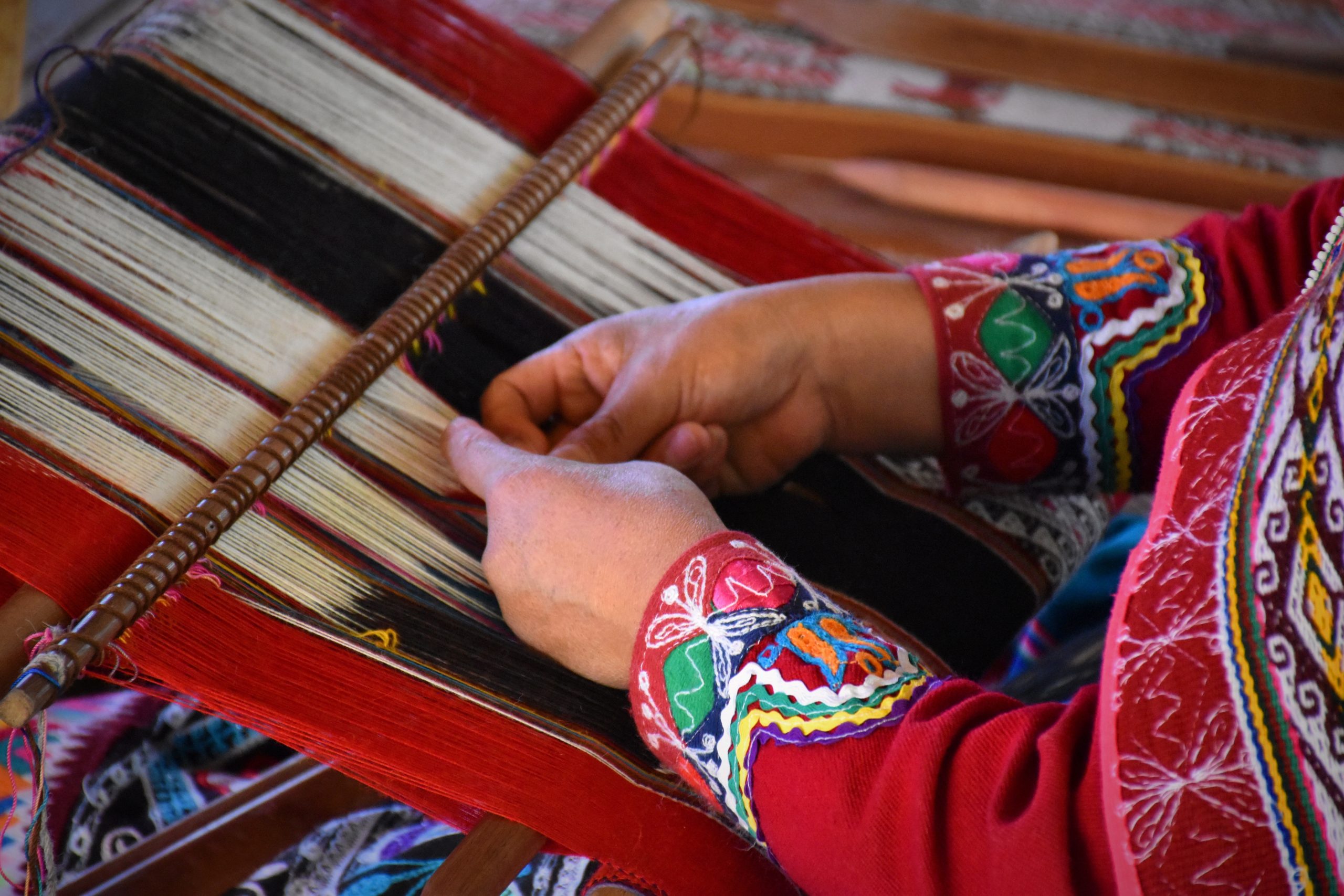
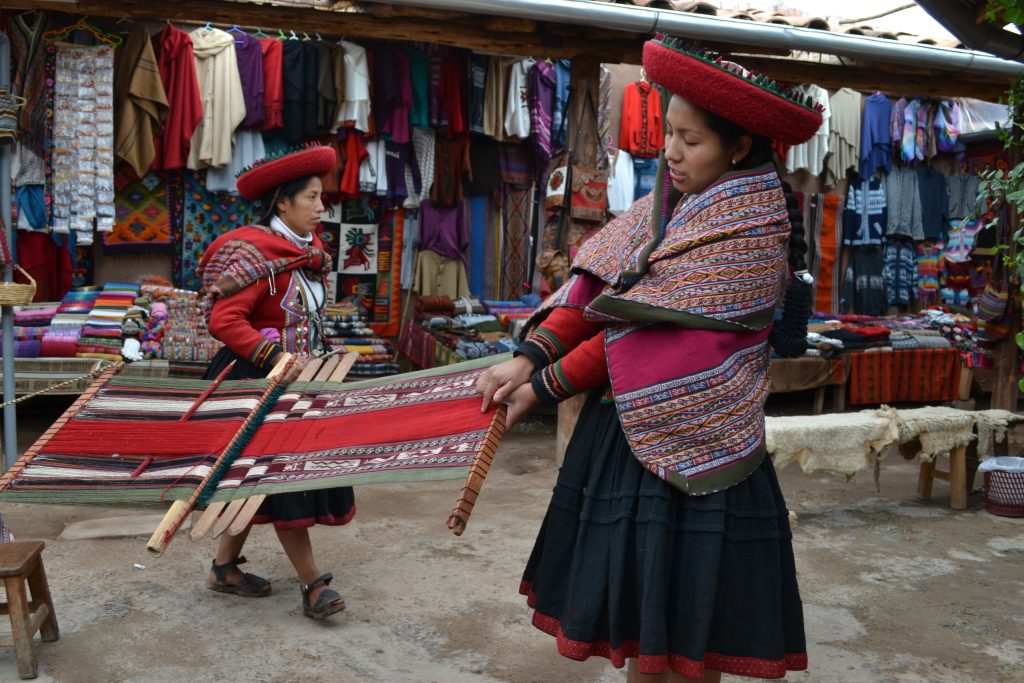
Textiles, historic weaving techniques and livestock breeding were central to Inca and Quechua culture. The traditions and skills handed down through generations are labour-intensive and require extraordinary skill and sophistication, with some products reportedly requiring up to 9 miles of different coloured fibres!. Their sheer complexity led them to be valued more than precious metals during Inca times, and their intrinsic value was used to signify the owner’s prestige, status and power. Indeed, vicuña wool was so highly-prized that only the royal family was permitted to wear it. Consequently, traditional artisanal methods and Quechua culture are so closely interwoven as to be inseparable. Yet as has often been noted, these important Inca traditions are in danger of disappearing with the rise of cheaper, machine-made alternatives, where fast fashion facilitates the purchase of more for less, and undercuts the livelihood of traditional weaving communities. In recent years, the industry has been undercut by low-value products and counterfeit goods, with up to 57% of present textile imports coming from China. This machine production of Peruvian textiles also raises concerns about the authenticity of the products. As noted previously, traditional textiles are often valued not only for their aesthetic appeal but also for the cultural stories and meanings they carry. Mechanised production strips the products of these cultural nuances, as the personal touch and cultural insights of individual artisans are stripped from the production process. This leads to the simplification and stereotyping of a diverse and complex heritage; the rich tapestry of Quechua traditions, languages, and customs is reduced to a narrow and superficial representation that aligns with market expectations, but fails to capture the true depth and diversity of the culture. For generations, the culturally-rich knowledge system of the Peruvian textile tradition has provided empowerment and voice to the indigenous population, perhaps most of all for the women; if these practices are made unsustainable, and if new generations are not incentivised to learn the skills, then the trade will die out, and with it a core part of Quechua culture.

Whilst millions of dollars enter Peru, the money fails to reach the hands of local communities facing the consequences of globalisation and competition, and this imbalance contributes to the marginalisation of the very people whose culture is being commodified. Whilst superficial elements of Quechua culture are exploited for economic purposes, fundamental Quechua language, land and cultural rights are historically and presently overlooked. Tellingly, not until the 2017 census were Peruvians asked whether they identify with any one of 50-plus Indigenous groups, and whilst Quechua is the native tongue for millions, and has been an official language since 1975, little is done for its promotion. In fact, as evidence suggests, ‘Even in Cusco, which is predominantly a city of indigenous people, they also discriminate a lot against people from rural communities because of the way they dress, their skin, their education, the way they speak’, with many families hesitant to pass Quechua on to their children for fear of discrimination. Persistent racist attitudes at the heart of the establishment were acknowledged by 81% of the population in 2018, and were also laid bare during the 2023 protests with politicians using openly racist language towards indigenous populations. In educational terms too, there is a huge gap between urban and rural populations: ‘33.7% of women and 10.9% of men are illiterate in rural areas, in comparison to 7.4% of women and 2.4% of women in urban areas… only a third of Peruvians completely agree that education services adapt to the customs or traditions of their students’. The urban-rural divide is also key to understanding the lack of youth development programs for the rural indigenous population. Poverty rates affect 44.4% of the rural population, compared to only 15.1% of urban population. Food insecurity is chronic in rural areas, and life expectancy can be up to 20 years less than for urban counterparts. Yet paradoxically those who need development support the most are the least likely to receive it: with 75% of Peruvians living in urban areas, rural indigenous communities largely miss out on government development programs, and struggle to break out of the cycle of poverty.

These issues raise the question as to how to counteract the harm done. To combat the decline of traditional Incan textiles, it is crucial to support local artisans and their time-honoured craftsmanship. Establishing fair trade practices ensures that artisans receive just compensation for their intricate work. Presently, many Quecha communities in Peru do not receive fair prices for their textiles. Isolated rural communities lack direct market access, and often sell textiles at below production costs to local middlemen, destroying the social and cultural fabric of these communities. Initiatives such as that by LAFF’s partner organisation Mosqoy work with Quechua weavers to keep their art and culture alive through the revitalization of authentic handwoven textiles using natural fibres and dyes. Educational initiatives should be implemented to teach Quechua language and customs in schools, fostering a sense of pride and identity among younger generations. Collaborative efforts between government bodies and indigenous communities can establish cultural centres, providing a space for traditional practices, art, and storytelling. Additionally, advocating for policies that protect indigenous rights and land tenure ensures the continuity of Quechua communities. Ultimately, a combination of education, cultural promotion, economic support, and legal safeguards can work together to safeguard the rich heritage of Quechua culture.

La comercialización de la cultura quechua y sus consecuencias para los indígenas peruanos

La difícil situación de las comunidades indígenas es desde hace tiempo un tema de gran importancia en Perú. Como se ha señalado anteriormente en el blog del LAFF, las protestas del año pasado pusieron de manifiesto la frustración por la forma en que el sistema político favorece a las élites urbanas adineradas, mientras que descuida los intereses de las poblaciones indígenas rurales. Esta desatención es de gran alcance: informes y estudios han señalado la persistencia de las perforaciones petrolíferas en las tierras de los indígenas peruanos, y han descrito cómo la consiguiente contaminación por petróleo ha dañado profundamente la vida y los medios de subsistencia de los indígenas. Además, la capacidad de estas comunidades para impedirlo es limitada, pues en comparación con sus países vecinos, Ecuador y Bolivia, los indígenas peruanos llevan mucho tiempo luchando por conseguir una influencia política significativa. En línea con este tema, este blog hablará de la explotación de la cultura tradicional quechua, argumentando que este fenómeno se produce con demasiada frecuencia sin compensar adecuadamente a las comunidades indígenas que son las legítimas administradoras de estas expresiones culturales.

El turismo en Perú es el tercer contribuyente más importante a la economía peruana, ya que atrae a más de 4 millones de turistas al año y aporta aproximadamente el 7% del PIB. Uno de los principales atractivos para los turistas extranjeros es el legado cultural de los incas, transmitido a través de sus edificios, su artesanía y su gente: los viajeros quedan maravillados ante los bellos vestigios de ciudades y pueblos antiguos, los tejidos, ornamentos y piezas de joyería vibrantes, y la cultura actual del pueblo quechua. Machu Picchu, considerado por muchos la joya de la corona de su viaje a Perú, atrae cada año a más de 1,5 millones de turistas, la mayoría de ellos envueltos en tejidos, jerseys, ponchos o baratijas peruanos. La cultura inca, preinca y quechua moderna es, por tanto, de vital importancia para la industria turística peruana y, por asociación, para su economía. Sin embargo, aunque la esencia de estas culturas las convierte en un producto irresistible para los turistas, su comercialización excesiva ha provocado una serie de inconvenientes y efectos nocivos importantes, lo que ha creado preocupaciones y dificultades para su protección y conservación.

Esta pérdida de control sobre la representación y difusión de la cultura quechua pasa de los miembros de la comunidad a entidades externas, puede dar lugar a una distorsión de la narrativa de la cultura, ya que las decisiones sobre cómo se presenta y se comercializa son tomadas por personas o empresas que pueden no comprender o respetar plenamente los matices y el significado culturales. Al mismo tiempo, las empresas grandes textiles que comercian a costa de la antigua cultura quechua perjudican a los artesanos y tejedores tradicionales; estas empresas y otros empresarios externos explotan los diseños tradicionales sin compensar adecuadamente a las comunidades indígenas herederas de esta cultura.

Los textiles, las técnicas históricas de tejido y la cría de ganado fueron fundamentales para la cultura inca y quechua. Las tradiciones y técnicas transmitidas de generación en generación exigen una gran cantidad de mano de obra y una habilidad y sofisticación extraordinarias, y se dice que algunos productos requieren hasta 9 millas de fibras de colores diferentes. Su complejidad enorme hizo que en la época de los incas se valoraran más que los metales preciosos, y su valor intrínseco se utilizaba para significar el prestigio, el estatus y el poder del propietario. De hecho, la lana de vicuña era tan apreciada que sólo la familia real podía vestirla. En consecuencia, los métodos artesanales tradicionales y la cultura quechua están tan estrechamente entrelazados que resultan inseparables. Sin embargo, como se ha señalado a menudo, estas importantes tradiciones incas corren peligro de desaparecer con el auge de alternativas más baratas, fabricadas a máquina, donde la moda rápida facilita la compra de más por menos, y socava el sustento de las comunidades tejedoras tradicionales. En los últimos años, la industria se ha visto perjudicada por productos de bajo valor y falsificaciones, y hasta el 57% de las importaciones textiles actuales proceden de China. Esta producción mecanizada de textiles peruanos también suscita dudas sobre la autenticidad de los productos. Como ya se ha señalado, los tejidos tradicionales suelen valorarse no sólo por su atractivo estético, sino también por las historias y significados culturales que encierran. La producción mecanizada despoja a los productos de estos matices culturales, ya que el toque personal y los conocimientos culturales de los artesanos individuales se eliminan del proceso de producción. Esto conduce a la simplificación y estereotipación de un patrimonio diverso y complejo; el rico tapiz de tradiciones, lenguas y costumbres quechuas se reduce a una representación estrecha y superficial que se ajusta a las expectativas del mercado, pero no capta la verdadera profundidad y diversidad de la cultura. Durante generaciones, el sistema de conocimientos culturalmente rico de la tradición textil peruana ha proporcionado poder y voz a la población indígena, quizás sobre todo a las mujeres; si estas prácticas se hacen insostenibles, y si no se incentiva a las nuevas generaciones a aprender las habilidades, entonces el comercio se extinguirá, y con él una parte fundamental de la cultura quechua.

Mientras millones de dólares entran en Perú, el dinero no llega a las manos de las comunidades locales que se enfrentan a las consecuencias de la globalización y la competencia, y este desequilibrio contribuye a la marginación de las mismas personas cuya cultura se está mercantilizando. Mientras se explotan elementos superficiales de la cultura quechua con fines económicos, los derechos fundamentales de los quechuas a la lengua, la tierra y la cultura se pasan por alto histórica y actualmente. Resulta revelador que hasta el censo de 2017 no se preguntara a los peruanos si se identificaban con alguno de los más de 50 grupos indígenas, y aunque el quechua es la lengua materna de millones de personas y es lengua oficial desde 1975, se hace muy poco por su promoción. De hecho, como sugieren las pruebas, “incluso en Cusco, que es una ciudad predominantemente indígena, también discriminan mucho a las personas de las comunidades rurales por su forma de vestir, su piel, su educación, su forma de hablar”, y muchas familias dudan en transmitir el quechua a sus hijos por miedo a la discriminación. Las actitudes racistas persistentes y fueron reconocidas por el 81% de la población en 2018, y también quedaron al descubierto durante las protestas de 2023, con políticos que utilizaron un lenguaje abiertamente racista hacia las poblaciones indígenas. También en términos educativos, existe una enorme brecha entre las poblaciones urbanas y rurales: “el 33,7% de las mujeres y el 10,9% de los hombres son analfabetos en las zonas rurales, en comparación con el 7,4% de las mujeres y el 2,4% de las mujeres en las zonas urbanas… solo un tercio de los peruanos está completamente de acuerdo con que los servicios educativos se adapten a las costumbres o tradiciones de sus alumnos”. La brecha urbano-rural también es clave para entender la falta de programas de desarrollo juvenil para la población indígena rural. Los índices de pobreza afectan al 44,4% de la población rural, frente a sólo el 15,1% de la población urbana. La inseguridad alimentaria es crónica en las zonas rurales, y la esperanza de vida puede ser hasta 20 años inferior a la de sus homólogos urbanos. Sin embargo, paradójicamente, los que más necesitan ayuda al desarrollo son los que menos probabilidades tienen de recibirla: con el 75% de los peruanos viviendo en zonas urbanas, las comunidades indígenas rurales se quedan en gran medida fuera de los programas de desarrollo del gobierno y luchan por salir del círculo de la pobreza.

Estos problemas plantean la cuestión de cómo contrarrestar el daño causado. Para combatir el declive de los tejidos tradicionales incas, es crucial apoyar a los artesanos locales y su artesanía ancestral. Establecer prácticas de comercio justo garantiza que los artesanos reciban una compensación justa por su intrincado trabajo. En la actualidad, muchas comunidades quechuas de Perú no reciben precios justos por sus tejidos. Las comunidades rurales aisladas carecen de acceso directo al mercado, y a menudo venden los textiles por debajo de los costes de producción a intermediarios locales, destruyendo el tejido social y cultural de estas comunidades. Iniciativas como la de Mosqoy, organización asociada de LAFF, trabajan con tejedores quechuas para mantener vivo su arte y su cultura mediante la revitalización de auténticos tejidos a mano con fibras y tintes naturales. Deberían ponerse en marcha iniciativas educativas para enseñar la lengua y las costumbres quechuas en las escuelas, fomentando un sentimiento de orgullo e identidad entre las generaciones más jóvenes. La colaboración entre organismos públicos y comunidades indígenas puede servir para crear centros culturales que ofrezcan un espacio para las prácticas tradicionales, el arte y la narración de cuentos. Además, la defensa de políticas que protejan los derechos indígenas y la tenencia de la tierra garantiza la continuidad de las comunidades quechuas. En definitiva, una combinación de educación, promoción cultural, apoyo económico y protecciones jurídicas puede contribuir a salvaguardar el rico patrimonio de la cultura quechua.

Introduction

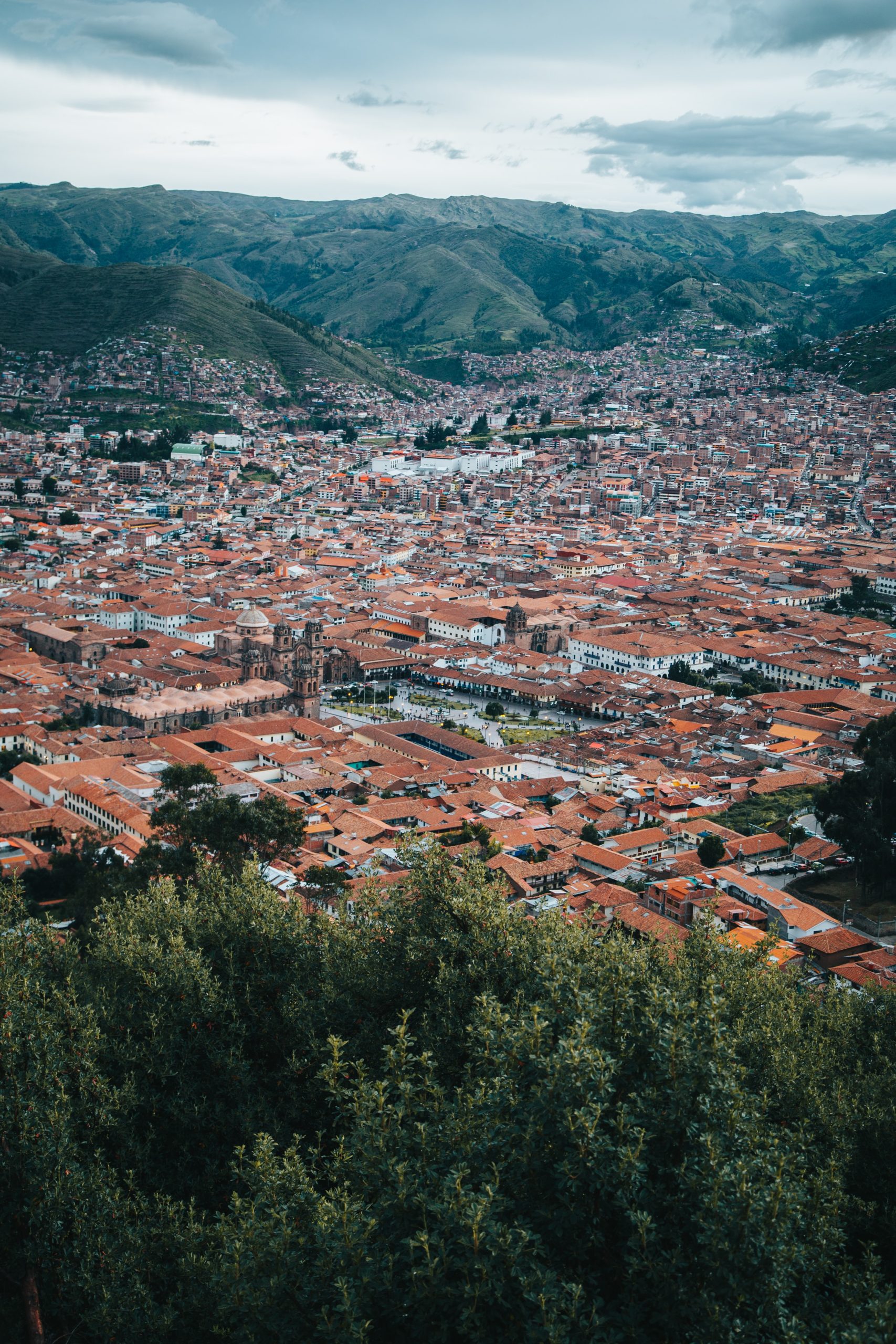
Living in Cuzco and volunteering with LAFF has been an incredible experience so far. I have worked with some fantastic people and had the opportunity to go and visit many cool places in the city and the Sacred Valley. Coming here for a longer period of time, rather than just travelling through, has allowed me to really engage with the area and not lose sight of the incredible people living here, as well as discover sustainable tourism as a feasible option for the future. I have chosen the topic of sustainable tourism as I believe that this is not only an important topic of interest, within the context of the current climate crises, but it also relates to my own experience in Cuzco and previous experience living and volunteering in Paraguay. I think that being a tourist nowadays does require some sort of understanding of the effects of travel on our surroundings, and so I am wanting to explore how this can be practised in an affordable and realistic way. 

What is Sustainable Tourism?

Sustainable tourism has been described in various ways. The World Tourism Organisation defines it as ‘tourism that takes full account of its current and future economic, social and environmental impacts, addressing the needs of visitors, the industry, and host communities’ (1). Further, it encompasses ‘environmental awareness, and conserves and protects the environment, respects wildlife, as well as cultural diversity, and improves the welfare and livelihoods of local communities by supporting their local economies and the human and natural environment as a whole’ (2). This is particularly relevant within this region. Sites like Machu Picchu receive approximately 1.5 million visitors annually and so the positive and negative impacts of global tourism can be seen clearly within Perú. The country further advertises different types of tourism, including jungle visits, cultural visits to the Sacred Valley and coastal visits. This means that tourism has a wide-ranging impact on the economy, culture and environment of Perú and therefore sustainable tourism relates heavily to the country’s future.

Types

Perhaps one of the most known forms of sustainable tourism is Ecotourism; this is a concept which has been described by Fennell as a ‘sustainable form of natural resource-based tourism that focuses primarily on experiencing and learning about nature, and which is ethically managed to be low-impact, non-consumptive and locally-oriented’ (3), whilst the Global Ecotourism Network states it as ‘responsible travel to natural areas that conserves the environment and sustains the well-being of the local people’ (4). This may include the money raised from visiting natural places being directly invested into the protection of local ecosystems. This has been hailed as being positive as it allows tourists to contribute directly to conservation and the local communities’ economy. Examples of this type of sustainable tourism can be seen in places such as Puerto Maldonado or Iquitos in Perú, where tourists can volunteer their time in conservation and observe animals in an untouched environment. Yet, many have argued that this form of tourism poses a serious barrier to achieving complete sustainability within conservation and wildlife care, by disrupting natural eating and breeding patterns of wildlife. Whilst ecotourism may hold some benefits, such as directly funding the conservation and protection of endangered animals, there still remain aspects to be explored. 

If you are wanting a trip into nature in Perú, whether that be to volunteer at an animal sanctuary or visit natural areas of beauty, it is vital to ensure that this actually helps and that the money raised goes directly towards conservation. The International Ecotourism Society is one such organisation which may help to identify sustainable travel destinations where the animals are prioritised and human impact minimal.

How can we practise it?

There are many ways to ensure that we are practising sustainable tourism, if like me you are wanting to travel and also help our surroundings. One of the many methods of support, which I attempt to practise, is buying from local businesses. In particular, buying locally-made crafts and souvenirs ensures the contribution to the economy will have a more direct and positive impact through supporting authentic cultural heritage. I know that sometimes these crafts may be more expensive, but wherever we can help is amazing! For example, head out to Chinchero (about 30km from Cuzco) where you can see traditional weaving of garments and support the local community by purchasing locally-made items such as gloves or ponchos. As well as trying to use more low-carbon public transport systems such as local buses wherever possible and avoiding single-use plastic, even tour operators can be analysed to ensure you are travelling with the correct company. One of LAFF’s partner organisations, Mosqoy, focuses particularly on the empowerment of local Quechua culture through textiles and allows tourists to visit and understand a traditional way of life in the Andes in a respectful and positive way. Mosqoy also values autonomy and independence for the textile-makers and ensuring the communities receive a fair price for their work. Whilst this may seem overwhelming, engaging with an organisation like this can go a long way in helping our planet when travelling. 

Slow Travel

With rising environmental awareness, recognition of slow tourism within the sustainable tourism industry has also increased. Dickinson argues that slow travel focuses not only on low-carbon modes of transportation but also on participation in relatively slower forms of travel for the sake of exploring local communities, history and culture (5). Timms and Conway have described it as encompassing three aspects of sustainability (6), of which socio-cultural and economic are particularly relevant for Cuzco, as tourists can help to financially maintain the social and cultural authenticity of the Sacred Valley and the region by supporting community-based tourism through purchasing locally-sourced food, locally-made souvenirs and joining ethical tours. This concept also motivates travellers to decrease their travel frequency, stay longer at their destination and take a favourable approach towards resources.

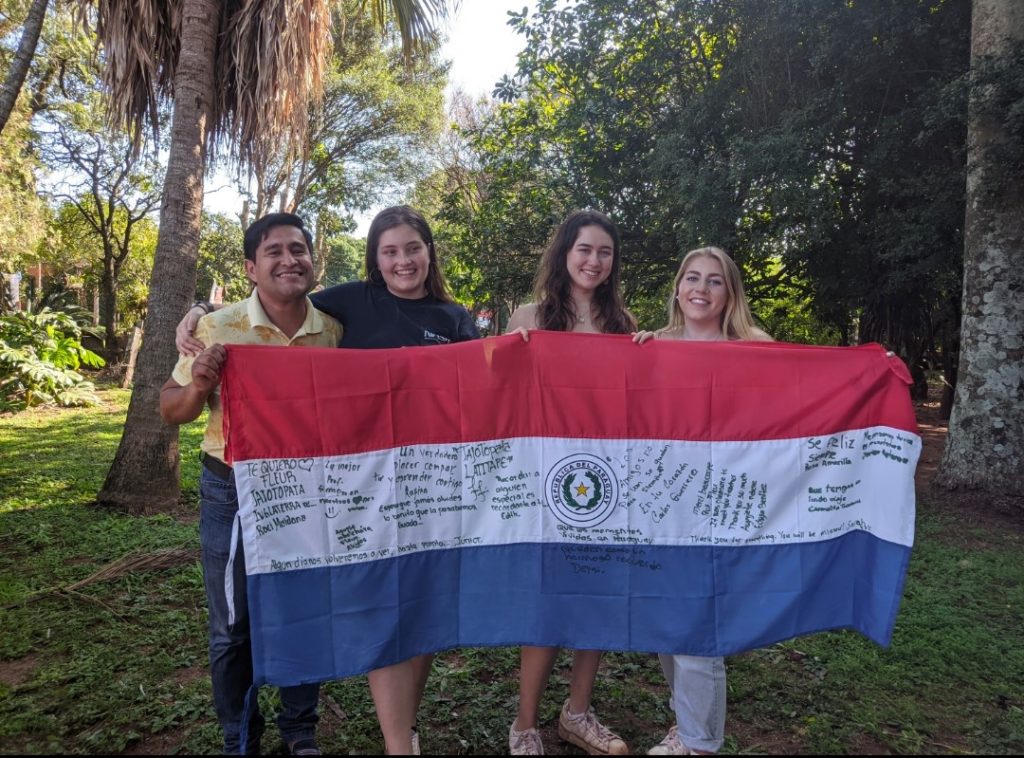
I personally hadn’t heard of slow travel until recently and I was interested in understanding how it can be practised and its benefits. I chose to live in Paraguay for 5 months last year as part of my Year Abroad and as a result I was able to fully appreciate the benefits, to not only myself but also the community and the environment. Volunteering through teaching English and living with a host family allowed me to fully understand the importance of local culture and traditions, rather than travelling through quickly and abruptly. I also tried to ensure I was taking the best means of public transport possible to visit more local attractions. Whilst I understand that this is not possible for everyone, the experience I had whilst living in one place rather than travelling through quickly was an unforgettable experience. This also fueled my desire to revisit South America and experience life more profoundly in another country. Perú has always been on my list of dream countries to visit so when I was researching the best way to come, volunteering at a charity like LAFF quickly became a fantastic option for me. I knew it would allow me to fully immerse myself in the culture of Perú as well as be able to understand how to financially and responsibly contribute to the local economy and the region. If the opportunity ever arises to visit a place in this way, I would definitely recommend it. 

As seen, if you are wanting to travel more sustainably, volunteering abroad with a charity like LAFF could be a perfect opportunity to practise this. Say you want to spend a couple months in Perú but want to experience more of the culture and reduce your environmental impact at the same time, offering your time to a charity like LAFF can ensure that you are making a positive, rather than negative difference. Working for a charity like LAFF which also values partnership with established local organisations, ensuring a higher quality of educational programmes and efficiency with what we do, can ensure that you are giving back to the community in which you are living in a way that is not at the expense of those living there. I have personally loved my experience living and working in Cuzco so far, as the location offers many opportunities for travelling slowly to local hikes and attractions, and LAFF has enabled me to fully engage with local communities and people and understand the culture in a more authentic way. 

Travelling sustainably can be difficult, and it is oftentimes easier to travel how we are used to travelling. There may be financial or time constraints, however only a few changes may have a large impact on the environment we are visiting. If you are interested in practising sustainable tourism on your next visit to South America, perhaps volunteering with a charity like LAFF could be a good place to start.

Turismo sostenible: Garantizar el futuro de nuestro planeta durante las vacaciones 

La Introducción

Vivir en Cuzco y ser voluntario con LAFF ha sido una experiencia increíble hasta ahora. He trabajado con gente fantástica y he tenido la oportunidad de visitar muchos lugares interesantes de la ciudad y del Valle Sagrado. Venir aquí durante un periodo de tiempo más largo, en lugar de simplemente viajar, me ha permitido comprometerme realmente con la zona y no perder de vista a las personas increíbles que viven aquí, así como descubrir el turismo sostenible como una opción viable para el futuro. He elegido el tema del turismo sostenible porque creo que no sólo es un tema de interés importante, en el contexto de la actual crisis climática, sino que también está relacionado con mi propia experiencia en Cuzco y con mi experiencia previa de vida y voluntariado en Paraguay. Creo que ser turista hoy en día requiere algún tipo de comprensión de los efectos del viaje en nuestro entorno, por lo que quiero explorar cómo se puede practicar de una manera asequible y realista.

¿Qué es el turismo sostenible? 

El turismo sostenible se ha descrito de formas diversas. La Organización Mundial del Turismo lo define como “el turismo que tiene plenamente en cuenta sus repercusiones económicas, sociales y medioambientales actuales y futuras, atendiendo a las necesidades de los visitantes, la industria y las comunidades anfitrionas” (1). Además, engloba “la conciencia medioambiental, y conserva y protege el medio ambiente, respeta la fauna y la flora, así como la diversidad cultural, y mejora el bienestar y los medios de vida de las comunidades locales apoyando sus economías locales y el entorno humano y natural en su conjunto” (2). Esto es especialmente relevante en esta región. Lugares como Machu Picchu reciben aproximadamente 1,5 millones de visitantes al año, por lo que las repercusiones positivas y negativas del turismo mundial pueden verse claramente en Perú. Además, el país anuncia diferentes tipos de turismo, como visitas a la selva, visitas culturales al Valle Sagrado y visitas a la costa. Esto significa que el turismo tiene un impacto amplio en la economía, la cultura y el medio ambiente de Perú y, por tanto, el turismo sostenible está muy relacionado con el futuro del país.

Tipos

Tal vez una de las formas más conocidas de turismo sostenible sea el ecoturismo, un concepto descrito por Fennell como “una forma sostenible de turismo basado en los recursos naturales que se centra principalmente en experimentar y aprender sobre la naturaleza, y que se gestiona éticamente para tener un bajo impacto, no consumir y estar orientado a lo local” (3), mientras que la Red Mundial de Ecoturismo lo define como “un viaje responsable a zonas naturales que conserva el medio ambiente y mantiene el bienestar de la población local” (4). Esto puede incluir que el dinero recaudado por visitar lugares naturales se invierta directamente en la protección de los ecosistemas locales. Esto se ha considerado positivo, ya que permite a los turistas contribuir directamente a la conservación y a la economía de las comunidades locales. Ejemplos de este tipo de turismo sostenible pueden verse en lugares como Puerto Maldonado o Iquitos, en Perú, donde los turistas pueden dedicar su tiempo como voluntarios a la conservación y observar animales en un entorno natural. Sin embargo, muchos sostienen que esta forma de turismo supone un obstáculo serio para lograr una sostenibilidad completa en el ámbito de la conservación y el cuidado de la vida salvaje, al alterar los patrones naturales de alimentación y reproducción de la fauna. Aunque el ecoturismo puede tener algunas ventajas, como financiar directamente la conservación y protección de animales en peligro, aún quedan aspectos por explorar.

Si deseas realizar un viaje a la naturaleza en Perú, ya sea para trabajar como voluntario en un santuario de animales o visitar parajes naturales de gran belleza, es importante asegurarse de que realmente ayuda y de que el dinero recaudado se destine directamente a la conservación. La Sociedad Internacional de Ecoturismo es una organización que puede ayudar a identificar destinos turísticos sostenibles donde se dé prioridad a los animales y el impacto humano sea mínimo.

¿Cómo podemos practicarlo?

Hay muchas formas de asegurarse de que practicamos un turismo sostenible, si como yo quieres viajar y además ayudar a nuestro entorno. Uno de los muchos métodos de ayuda, que intento practicar, es comprar en negocios locales. En particular, comprar artesanía y recuerdos fabricados localmente garantiza que la contribución a la economía tendrá un impacto más directo y positivo al apoyar el auténtico patrimonio cultural. Sé que a veces estas artesanías pueden ser más caras, ¡pero siempre que podamos ayudar es increíble! Por ejemplo, en el pueblo de Chinchero (a unos 30 km de Cuzco), podrá ver el tejido tradicional de prendas de vestir y apoyar a la comunidad local comprando artículos de fabricación local, como guantes o ponchos. Además de intentar utilizar más sistemas de transporte público con bajas emisiones de carbono, como los autobuses locales, siempre que sea posible, y evitar el plástico de un solo uso, incluso se pueden analizar los operadores turísticos para asegurarse de que se viaja con la compañía correcta. Mosqoy, una de las organizaciones asociadas al LAFF, se centra especialmente en la potenciación de la cultura quechua local a través de los textiles y permite a los turistas visitar y comprender un modo de vida tradicional de los Andes de forma respetuosa y positiva. Mosqoy también valora la autonomía e independencia de los textileros y garantiza que las comunidades reciban un precio justo por su trabajo. Aunque pueda parecer abrumador, colaborar con una organización como ésta puede ayudar mucho a nuestro planeta cuando viajamos.

Slow Travel

Con el aumento de la conciencia medioambiental, también ha aumentado el reconocimiento del slow travel dentro de la industria del turismo sostenible. Dickinson sostiene que el slow travel se centra no sólo en los medios de transporte con bajas emisiones de carbono, sino también en la participación en formas de viaje relativamente más lentas en aras de la exploración de las comunidades locales, la historia y la cultura (5). Timms y Conway lo han descrito como un concepto que engloba tres aspectos de la sostenibilidad (6), de los cuales el sociocultural y el económico son especialmente relevantes para Cuzco, ya que los turistas pueden ayudar a mantener económicamente la autenticidad social y cultural del Valle Sagrado y la región apoyando el turismo comunitario mediante la compra de alimentos de origen local, recuerdos fabricados localmente y la participación en excursiones éticas. Este concepto también motiva a los viajeros a disminuir la frecuencia de sus viajes, permanecer más tiempo en su destino y adoptar una actitud favorable hacia los recursos.

Yo personalmente no había oído hablar del slow travel hasta hace poco y me interesaba saber cómo se puede practicar y cuáles son sus beneficios. El año pasado decidí vivir 5 meses en Paraguay como parte de mi Año en el Extranjero y, gracias a ello, pude apreciar plenamente sus beneficios, no sólo para mí, sino también para la comunidad y el medio ambiente. Trabajar como voluntario enseñando inglés y viviendo con una ‘familia local’ me permitió comprender plenamente la importancia de la cultura y las tradiciones locales, en lugar de viajar de forma rápida y brusca. También intenté asegurarme de tomar el mejor medio de transporte público posible para visitar más atracciones locales. Aunque comprendo que esto no es posible para todo el mundo, la experiencia de vivir en un lugar en vez de viajar deprisa fue inolvidable. Esto también alimentó mi deseo de volver a Sudamérica y experimentar la vida más profundamente en otro país. Perú siempre ha estado en mi lista de países soñados para visitar, así que cuando estaba investigando la mejor manera de venir, el voluntariado en una organización benéfica como LAFF se convirtió rápidamente en una opción fantástica para mí. Sabía que me permitiría sumergirme por completo en la cultura de Perú, así como comprender cómo contribuir financiera y responsablemente a la economía local y a la región. Si alguna vez se presenta la oportunidad de visitar un lugar de esta manera, sin duda lo recomiendo.

Como se ha visto, si quieres viajar de forma más sostenible, el voluntariado en el extranjero con una organización benéfica como LAFF puede ser una oportunidad perfecta para ponerlo en práctica. Digamos que quieres pasar un par de meses en Perú, pero quieres experimentar más de la cultura y reducir tu impacto ambiental al mismo tiempo, ofrecer tu tiempo a una organización benéfica como LAFF puede asegurar que estás haciendo una diferencia positiva, en lugar de negativa. Trabajar para una organización benéfica como LAFF que también valora la asociación con organizaciones locales establecidas, asegurando una mayor calidad de los programas educativos y la eficiencia con lo que hacemos, puede asegurar que usted está devolviendo a la comunidad en la que estás viviendo de una manera que no es a expensas de los que viven allí. Personalmente, me ha encantado mi experiencia de vivir y trabajar en Cuzco hasta ahora, ya que el lugar ofrece muchas oportunidades para viajar despacio a excursiones y atracciones locales, y LAFF me ha permitido comprometerme plenamente con las comunidades y personas locales y entender la cultura de una manera más auténtica.

Viajar de forma sostenible puede ser difícil, y a menudo es más fácil viajar como estamos acostumbrados. Puede haber limitaciones económicas o de tiempo, pero unos pocos cambios pueden tener un gran impacto en el entorno que visitamos. Si estás interesado en practicar el turismo sostenible en tu próxima visita a Sudamérica, quizá el voluntariado con una organización benéfica como LAFF sea un buen punto de partida.

Easter Week in Cusco

Here in Peru, Semana Santa is celebrated widely. 

In Cusco, the whole week is taken up by different events and celebrations. First and foremost, churches have their doors open to welcome people. 

On Palm Sunday or Domingo de Ramas, the beginning of Semana Santa, blessings are given. Usually, all churches in the city are open to people, without an admission fee, which means locals and tourists alike can enjoy visiting.

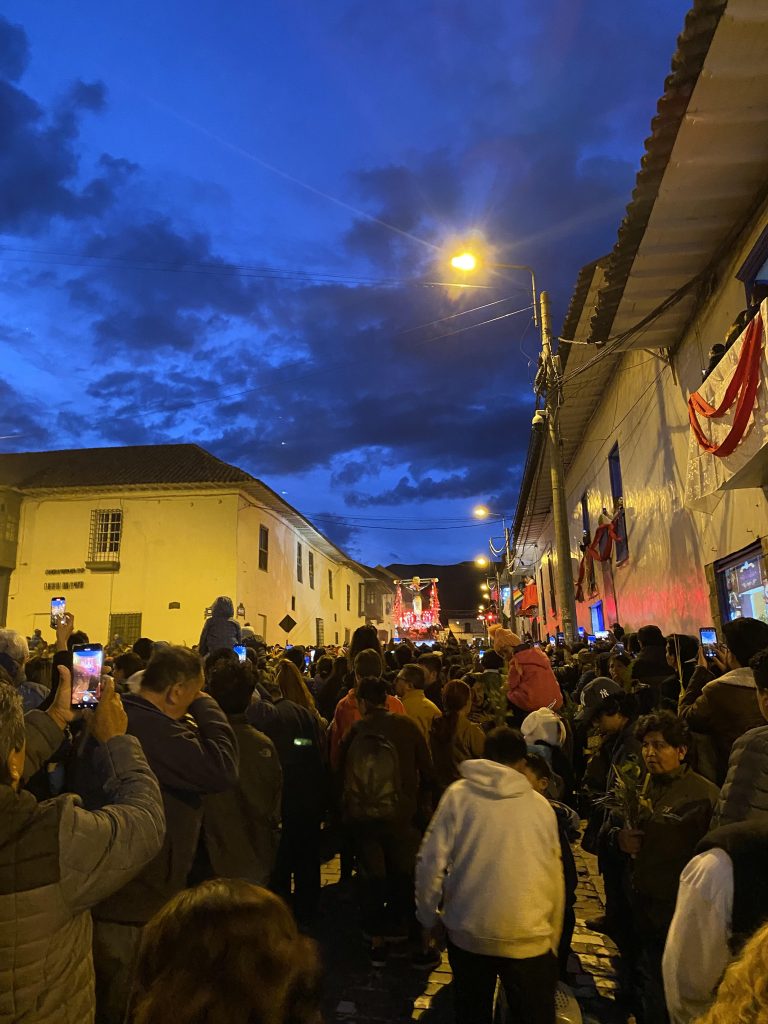
Holy Monday: On this day, there is a famous procession through the streets of Cusco, notably in la Plaza de Armas, and la Plaza San Francisco. Back in 1650, there was an earthquake in Cusco. In an attempt to stop it, people displayed a figure of Christ, to which it stopped. Therefore, every Monday, ‘El señor de los temblores’, is paraded through the city in honour. Hundreds of people wait to see this happen in the main squares and it is one of the biggest events in Cusco of the year.

Holy Friday: known as the day where 12 dishes are prepared, 6 of them being salty and 6 of them being sweet. The number 12 is significant due to the fact that there were 12 disciples. Often, the dishes are made with traditional Andean ingredients such as: corn, potatoes, grains, and different vegetables cultivated in the area. 

The week ends with Good Friday, which is a lot quieter, as people take time to reflect on the crucifixion of Jesus.

Visiting Cusco at this time of year offers an insight into the rich and diverse culture here in Cusco, Perú, and the importance of religious celebrations for the community.

Semana Santa en Cusco

Aquí en Perú, la Semana Santa se celebra ampliamente. 

En Cusco, la semana entera se llena con eventos y celebraciones diferentes. Antes que nada, las iglesias tienen sus puertas abiertas a todo el mundo. 

En el Domingo de Ramos, el inicio de la Semana Santa, se dan bendiciones. Generalmente, todas las iglesias en la ciudad están abiertas a toda la gente, sin entrada, lo que significa que lugareños y turistas puedan disfrutar.

El Lunes Santo: En este día, hay una procesión famosa a través de las calles de Cusco, principalmente en la Plaza de Armas y la Plaza San Francisco. En 1650, hubo un terremoto en Cusco. En un intento de pararlo, la gente sacó en procesión una imagen de Cristo, y el terremoto cesó. Por lo tanto, cada Lunes, ‘El Señor de Los Temblores’ va en procesión por las calles en honor a lo ocurrido. Cientos de personas esperan a verlo pasar en las plazas principales, y es uno de los eventos más grandes del año en Cusco.  

El Viernes Santo: es conocido como un día donde se preparan 12 platos, 6 de ellos siendo salados, y los otros 6 dulces. El número 12 es importante debido a que había 12 discípulos. A menudo, los platos están preparados con los ingredientes tradicionales Andinos como: maíz, papas, granos y vegetales diferentes cultivados en el área. 

La semana termina con el viernes santo, donde la gente toma tiempo para reflexionar sobre la crucifixión de Jesus.

Visitar Cusco en esta época ofrece una visión de la cultura diversa aquí en Cusco, y la importancia de las celebraciones religiosas para la comunidad.

A Week in the life of a Cusco Volunteer

laff volunteers

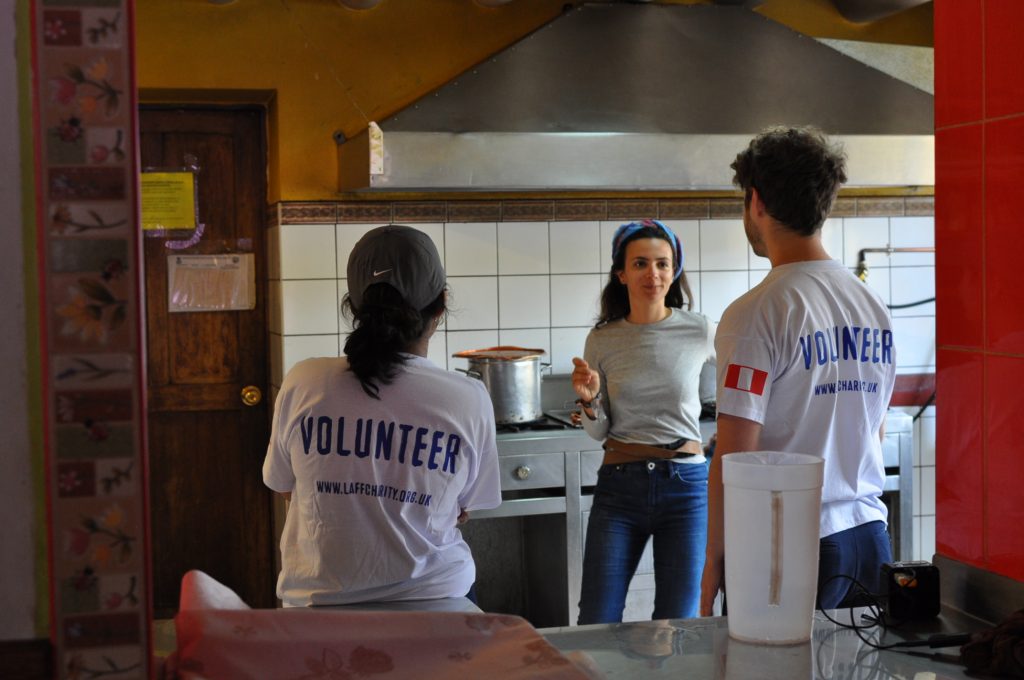
Like so many organisations LAFF is delighted to be able to welcome volunteers back in person to Cusco, after almost two years of operating online. With the arrival of Alma, as project manager, LAFF resumed its in-person activities. 

Life in Cusco can only be described as magical. Every day starts with a trip to the local San Blas market where we pick up freshly pressed ‘combinado’ juice from our favourite juice lady! Sometimes we pick up a bakery item from the local ‘panaderia’ as we make our way to the office, in Zaguan del Cielo, to begin the day of work. 

Twice a week in the office we have team meetings to update each other on what we are all working on so everyone knows what is going on! Most days we are based in the office to work, but sometimes we also work from home if it is more convenient. This allows us to explore the Cusco cafe scene too – which I have to say is impressive! A personal favourite is Cappuccino Cafe which overlooks the Plaza de Armas and makes for a very photogenic view of the famous square! It is also a great spot to soak up some of the Peruvian sun… 

But on days when we work in the office, we normally take a break for lunch at around 1 PM and we all go for a team lunch at the local restaurant serving the 9 soles ‘menu del dia’ or for a change of scenery, we also have some other favoured lunch locations in the local area including the falafel from a popular vegetarian gem or Ceviche stand at the San Blas market. Sometimes we also pay a visit to our favourite ‘tienda de galletas’ for dessert…. 

After lunch, we return to the office until about 5:30-6:30 to continue working on the current projects. These might include fundraising projects, arranging collaborations with local organisations to improve the personal development of the projects we support, working on social media or recruitment and so much more….

One of the best things about Cusco is that there is so much to do. It is almost impossible to run out of new places to explore. So in the evenings after work, we often go and explore the vast array of bohemian bars that are scattered around the meandering cobbled streets of the old town. A highlight is that many bars offer free salsa lessons… which is a great way to let your hair down and immerse yourself in local Peruvian culture after work. On other days, it can be just as relaxing to watch the sun setting over the dramatic mountains that act as the awe-inspiring backdrop of Cusco at one of the viewpoints around the city. 

`Every few weeks we also try to make sure that we visit our partners which usually involves catching a ‘collectivo’ to the projects, taking meetings, observing a workshop going on or catching up on any news. Many of the projects are situated outside of the centre of Cusco which means the journeys provide some extraordinary views of the Sacred Valley. It is always great to see first-hand how important LAFF’s work is to improve the access to education of these young people. 

The weekends are opportunities for volunteers to take day trips outside of the city if they wish. Examples of the many day trips possible include exploring local Inca ruins or Machu Picchu, visiting the chocolate and coca museums, going to the salt mines or exploring the Sacred Valley. One of the many selling points of Cusco is that you can live in a beautiful city but also be out in the countryside and explore nature within an hour. Equally, Cusco is well connected to other local cities in Peru and Bolivia so weekend trips to Arequipa (Peru’s white city), Lake Titicaca or Copacabana are all very easy.

Volunteering in Cusco is a truly enriching experience. The work is exceptionally fulfilling whilst being sustainable. Being situated in Cusco gives volunteers a launchpad to explore Peru whilst also immersing themselves in local culture in the city that was once the heart of the Inca empire. 

As the world turns its eyes to the Middle East yet again to see how the ceasefire between the Turkish military and the Kurdish forces of Northern Syria play out, the LAFF team felt it necessary to take a closer look at the events leading up to the incursion and the possible future consequences of Turkish aggression in the region. In order to do so, it must first be understood where exactly is Rojava and what is its geostrategic importance.

ROJAVA

Rojava is a region in Northern Syria that has traditionally been inhabited by the Kurdish population, but is also home to many Syrian minorities such as the Assyrians, Armenians, Circassians, Yazidis, Muslims and Christians[1].In 2012, while the Assad government was occupied with the civil war in the South, a new government was set up in the Rojava region in Northern Syria[2]. This decentralised government,  led by the Kurdish Syrian Democratic Council, has been set up on the basis of feminism, egalitarianism and ecology where women have veto power in all legislative decisions and occupy fifty percent of all governmental roles, government is broken down into local councils and communes where direct democracy is at play and all food is sourced from farming cooperatives[3]

The military arm of the Syrian Democratic Council, the Syrian Democratic Forces (SDF) (primarily consisting of the Kurdish branch the People’s Protection unit (YPG)) have been instrumental in the struggle against ISIS as they were at the forefront of the battle and had allied themselves with US troops fighting in the area[4]

THE TURKISH INVASION

On 9th October 2019 Turkey launched Operation “Peace Spring,” an offensive into the Rojava region of Northern Syria[5]. Turkey cites the YPG’s connection with the PKK (Turkey’s Kurdish separatists party) which is regarded by the Erdogan government as a terrorist group) as proof of terrorist connection[6], and hopes to create a ’safe zone’ 30km deep along the Syrian border free from any form of Kurdish governmental forces, where they plan to resettle the 3.6 million Syrian refugees currently residing in Turkey[7].

This is not the first time that Turkey has challenged the sovereignty of Syria’s northern regions during the war; in 2017 they launched an offensive in the Idlib region and more recently they occupied the region of Afrin[8]. Operation “Olive branch,” as the Afrin invasion was known, resulted in the death of approximately 500 civilians and the displacement of 167 000 people[9]. The displacement led to a dramatic demographic shift in the region, with houses and property owned by Kurds seized by the Turkish backed jihadists and their militia Free Syrian Army (FSA) and an imposed ban on the Kurdish language and culture[10].

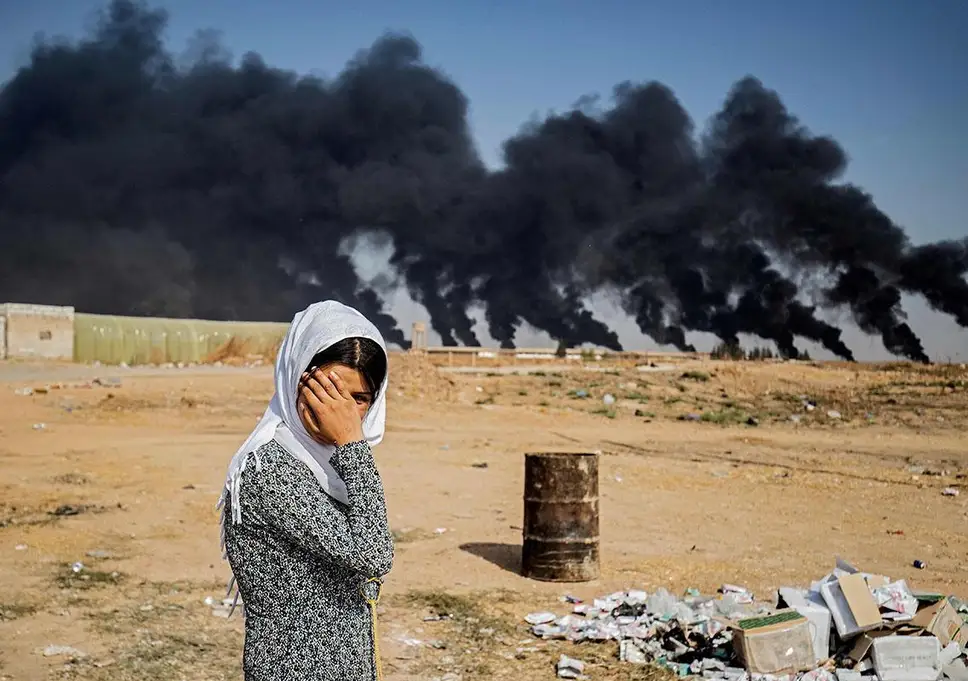
The current invasion of Rojava has been catastrophic for the local population, with 710 000 of the 3 million population that was already displaced due to the civil war now facing further uncertainty[11]. Within two week the conflict has resulted in an additional 180 000 people displaced, including 74 000 children according to UNICEF and the International Rescue Committee predicting a further displacement of 400 000 people in the immediate future. Airstrikes and mortar bombings have targeted Syrian schools, medical centres as well as the Alouk water tank which provided water to 400 000 residents[12]. These actions have been reported by Amnesty International as war crimes and the indiscriminate use of force against civilians, leading to the death of 218 Syrians including 18 children, is gravely concerning, with reports stating that Turkey are unable or unwilling to reign in their funded militias[13]. The need for humanitarian assistance is dire, as aid agencies have all evacuated[14] as the conflict progressed and the number of people needing humanitarian assistance currently at more than a million[15].

ISIS THREAT

Turkey’s incursion has brought about a new concern that the 12 000 ISIS prisoners kept in cells guarded by the YPG may escape while the Kurdish forces are distracted by the incoming invasion[16]. International Crisis Group has warned that the instability in the region could lead to a reemergence of ISIS in the area[17]. Additionally there are currently 100 000 people who are family of the prisoners that are kept in IS camps with lack of access to clean water and healthcare facilities, which have led to the deaths of 340 children from preventable diseases[18]. With most countries refusing to repatriate family members of ISIS, their lives have also been caught in the crossfires. 

CEASEFIRE

On the 18th October 2019 after many talks, a ceasefire was established between Turkish armed forces and the Syrian Democratic Forces of Rojava[19]. Despite heavy shelling on the first day of the ceasefire by Turkey in the border town of Ras Al-Ayn, the ceasefire has remained for the subsequent days[20]. Turkey is adamant that this is merely a ‘pause’ and it will continue its military operations until all Kurdish forces retreat from their homeland along the 444 km border until Iraq[21]. The Kurdish forces also refuse to back down, declining to abandon their homeland.

Turkey’s actions have led to varied responses across the international community; France, the Netherlands, Norway, Finland and Germany have pledged to cease supplying Turkey with arms for the duration of the conflict and EU Council president Donald Tusk has condemned Turkey for its suppression of the Syrian Kurds but the United Nations Security Council have been thwarted in its attempts to condemn Turkey by ally Russia[22]. Turkey’s president Erdogan has been threatening Europe that if their actions are labelled an ‘occupation’ Turkey will not hesitate to unleash their population of refugees into Europe which was met with a promise of using force against the refugees by Hungarian leader Viktor Orban[23]

CONCLUSION

The fate of the Syrian Kurds are at a precarious state, and greater awareness of their situation as well as a more coordinated response to condemn Turkey’s aggression is needed. This conflict puts into jeopardy one of the world’s greatest experiments in democracy as well as potentially creating a further refugee crisis, tearing the cohesiveness of North Syria’s heterogeneous society by Turkey’s forced “Arabization” of the area, and most importantly creating the death and disruption to countless civilians’ lives. While hope looks bleak, we must all unite against this injustice and only then can we rid the world of such repression and unnecessary cruelty. 

Ocupación de Rojava

Mientras el mundo vuelve los ojos al Medio Oriente una vez más para ver cómo la cesación del fuego entre el ejército turco y las fuerzas kurdas del norte de Siria se desarrolla, el equipo de las FAL consideró necesario examinar más detenidamente los acontecimientos que condujeron a la incursión y las posibles consecuencias futuras de la agresión turca en la región. Para hacerlo, primero hay que entender dónde está exactamente Rojava y cuál es su importancia geoestratégica.

ROJAVA

Rojava es una región en el norte de Siria que tradicionalmente ha sido habitada por la población kurda, pero también es el hogar de muchas minorías sirias como los asirios, armenios, circasianos, yazidíes, musulmanes y cristianos[1]. En 2012, mientras el gobierno de Assad estaba ocupado con la guerra civil en el sur, se estableció un nuevo gobierno en la región de Rojava, en el norte de Siria[2]. Este gobierno descentralizado, dirigido por el Consejo Democrático Sirio Kurdo, se ha establecido sobre la base del feminismo, igualitarismo y ecología donde las mujeres tienen poder de veto en todas las decisiones legislativas y ocupan el cincuenta por ciento de todas las funciones gubernamentales, El gobierno se divide en ayuntamientos y comunas donde la democracia directa está en juego y toda la comida proviene de cooperativas agrícolas[3]

El brazo militar del Consejo Democrático Sirio, las Fuerzas Democráticas Sirias (FDS) (compuesta principalmente por la rama kurda, la Unidad de Protección del Pueblo (YPG)) han sido fundamentales en la lucha contra el ISIS, ya que estaban a la vanguardia de la batalla y se habían aliado con las tropas estadounidenses que luchaban en la zona[4].

LA INVASIÓN TURCA 

 El 9 de octubre de 2019 Turquía lanzó la Operación Primavera de Paz, una ofensiva en la región de Rojava, en el norte de Siria[5]. Turquía cita la conexión del YPG con el PKK (partido separatista kurdo de Turquía), considerado por el gobierno de Erdogan como un grupo terrorista) como prueba de la conexión terrorista[6], y espera crear una zona segura a 30 km de profundidad a lo largo de la frontera siria libre de toda forma de fuerzas gubernamentales kurdas, donde planean reasentar a los 3,6 millones de refugiados sirios que actualmente residen en Turquía[7].

Esta no es la primera vez que Turquía ha desafiado la soberanía de las regiones septentrionales de Siria durante la guerra; en 2017 lanzaron una ofensiva en la región de Idlib y más recientemente ocuparon la región de Afrin[8]. La operación “Rama de olivo”, como se conoció en la invasión de Afrin, provocó la muerte de unos 500 civiles y el desplazamiento de 167.000 personas[9]. El desplazamiento condujo a un cambio demográfico dramático en la región, con casas y propiedades de los kurdos confiscadas por los yihadistas apoyados por Turquía y su milicia Ejército Sirio Libre (FSA) y una prohibición impuesta sobre el idioma y la cultura kurdos[10].

La actual invasión de Rojava ha sido catastrófica para la población local, con 710.000 de los 3 millones de habitantes que ya estaban desplazados debido a la guerra civil ahora enfrentan mayor incertidumbre[11]. En el plazo de dos semanas, el conflicto ha provocado el desplazamiento de otras 180.000 personas, incluidos 74.000 niños, según el UNICEF y el Comité Internacional de Rescate, lo que predice un nuevo desplazamiento de 400.000 personas en un futuro inmediato. Los ataques aéreos y los bombardeos con morteros se han dirigido contra escuelas, centros médicos y el tanque de agua de Alouk, que abastecía de agua a 400.000 residentes[12]. Amnistía Internacional ha denunciado estas acciones como crímenes de guerra y el uso indiscriminado de la fuerza contra civiles, que han provocado la muerte de 218 sirios, incluidos 18 niños, expresa su profunda preocupación por los informes que indican que Turquía no puede o no quiere reinar en sus milicias financiadas[13]. La necesidad de asistencia humanitaria es acuciante, ya que todos los organismos de asistencia han sido evacuados[14] a medida que avanzaba el conflicto y el número de personas que necesitaban asistencia humanitaria ascendía actualmente a más de un millón[15].

ISIS AMENAZA

La incursión de Turquía ha suscitado una nueva preocupación de que los 12.000 prisioneros del ISIS mantenidos en celdas vigiladas por el YPG puedan escapar mientras las fuerzas kurdas se distraen ante la invasión que se avecina[16]. International Crisis Group ha advertido que la inestabilidad en la región podría llevar a un resurgimiento del ISIS en la zona[17]. Además, en la actualidad hay 100.000 personas que son familiares de los presos que permanecen en campamentos de la Sociedad de la Información sin acceso a agua potable ni a servicios de atención de la salud, lo que ha provocado la muerte de 340 niños por enfermedades prevenibles[18]. Como la mayoría de los países se niegan a repatriar a familiares del ISIS, sus vidas también se han visto atrapadas en los fuegos cruzados. 

ALTO EL FUEGO

El 18 de octubre de 2019, después de numerosas conversaciones, se estableció una cesación del fuego entre las fuerzas armadas turcas y las Fuerzas Democráticas Sirias de Rojava[19]. A pesar de los intensos bombardeos efectuados el primer día de la cesación del fuego por Turquía en la ciudad fronteriza de Ras Al-Ayn, la cesación del fuego se ha mantenido durante los días siguientes[20]. Turquía insiste en que se trata simplemente de una pausa y continuará sus operaciones militares hasta que todas las fuerzas kurdas se retiren de su patria a lo largo de la frontera de 444 km hasta el Iraq[21]. Las fuerzas kurdas también se niegan a retroceder, negándose a abandonar su patria.

Las acciones de Turquía han dado lugar a diversas respuestas en toda la comunidad internacional; Francia, los Países Bajos, Noruega, Finlandia y Alemania se han comprometido a dejar de suministrar armas a Turquía durante el conflicto y el Presidente del Consejo de la UE, Donald Tusk, ha condenado a Turquía por su represión de los kurdos sirios, pero el Consejo de Seguridad de las Naciones Unidas han sido frustrados en sus intentos de condenar a Turquía por parte de Rusia aliada[22]. El presidente de Turquía, Erdogan, ha estado amenazando a Europa con que si sus acciones son etiquetadas como una ocupación, Turquía no dudará en liberar a su población de refugiados en Europa, que recibió la promesa de usar la fuerza contra los refugiados por El líder húngaro Viktor Orban[23].

CONCLUSIÓN

El destino de los kurdos sirios se encuentra en un estado precario, y se necesita una mayor conciencia de su situación, así como una respuesta más coordinada para condenar la agresión turca. Este conflicto pone en peligro una de las mayores experiencias de democracia del mundo, así como la posibilidad de crear una nueva crisis de refugiados, desgarrando la cohesión de la heterogénea sociedad del norte de Siria por la forzada arabización de Turquía de la zona, y lo más importante, la creación de la muerte y la interrupción de innumerables civiles’ vidas. Si bien la esperanza parece sombría, todos debemos unirnos contra esta injusticia y sólo entonces podremos librar al mundo de tal represión y crueldad innecesaria.

Sources

[1] https://itsgoingdown.org/interview-with-the-internationalist-commune-in-rojava-facing-the-threat-of-invasion/

[2] https://newint.org/features/2019/10/11/assault-rojava

[3] ibid

[4] https://www.jacobinmag.com/2019/10/rojava-syria-erdogan-turkey-united-states-military

[5] https://www.hrw.org/news/2019/10/11/turkey/syria-civilians-risk-syria-operation

[6] https://www.jacobinmag.com/2019/10/rojava-syria-erdogan-turkey-united-states-military

[7] https://www.theguardian.com/commentisfree/2019/oct/13/observer-view-on-syria-new-horror-foretold-shames-us-all

[8] https://www.genocidewatch.com/single-post/2019/10/08/Genocide-Watch-Turkey-is-planning-genocide-and-crimes-against-humanity-in-Northeastern-Syria?fbclid=IwAR2Xp7zcDFjxu8yOCDhxfAIuvLk_k14t0zBnh_P3KoWbpSxZ7Qb89OmjQ7w

[9] ibid

[10] https://www.jacobinmag.com/2019/10/rojava-syria-erdogan-turkey-united-states-military

[11]https://www.humanitarianresponse.info/sites/www.humanitarianresponse.info/files/documents/files/statement_alouk-en_.pdf

[12] https://www.bbc.com/news/world-middle-east-50041239

[13] https://www.haaretz.com/middle-east-news/syria/syria-turkey-kurds-trump-1.7973896

[14] https://www.theguardian.com/commentisfree/2019/oct/13/observer-view-on-syria-new-horror-foretold-shames-us-all

[15] https://www.humanitarianresponse.info/sites/www.humanitarianresponse.info/files/documents/files/statement_alouk-en_.pdf

[16] https://newint.org/features/2019/10/11/assault-rojava

[17] https://www.crisisgroup.org/middle-east-north-africa/eastern-mediterranean/syria/207-averting-isis-resurgence-iraq-and-syria

[18] https://www.hrw.org/news/2019/10/11/turkey/syria-civilians-risk-syria-operation

[19] https://www.haaretz.com/middle-east-news/syria/syria-turkey-kurds-trump-1.7973896

[20] https://www.middleeasteye.net/news/death-toll-mounts-thousands-flee-turkish-bombardment-syria

[21] https://www.haaretz.com/middle-east-news/syria/syria-turkey-kurds-trump-1.7973896

[22] ibid

[23] ibid

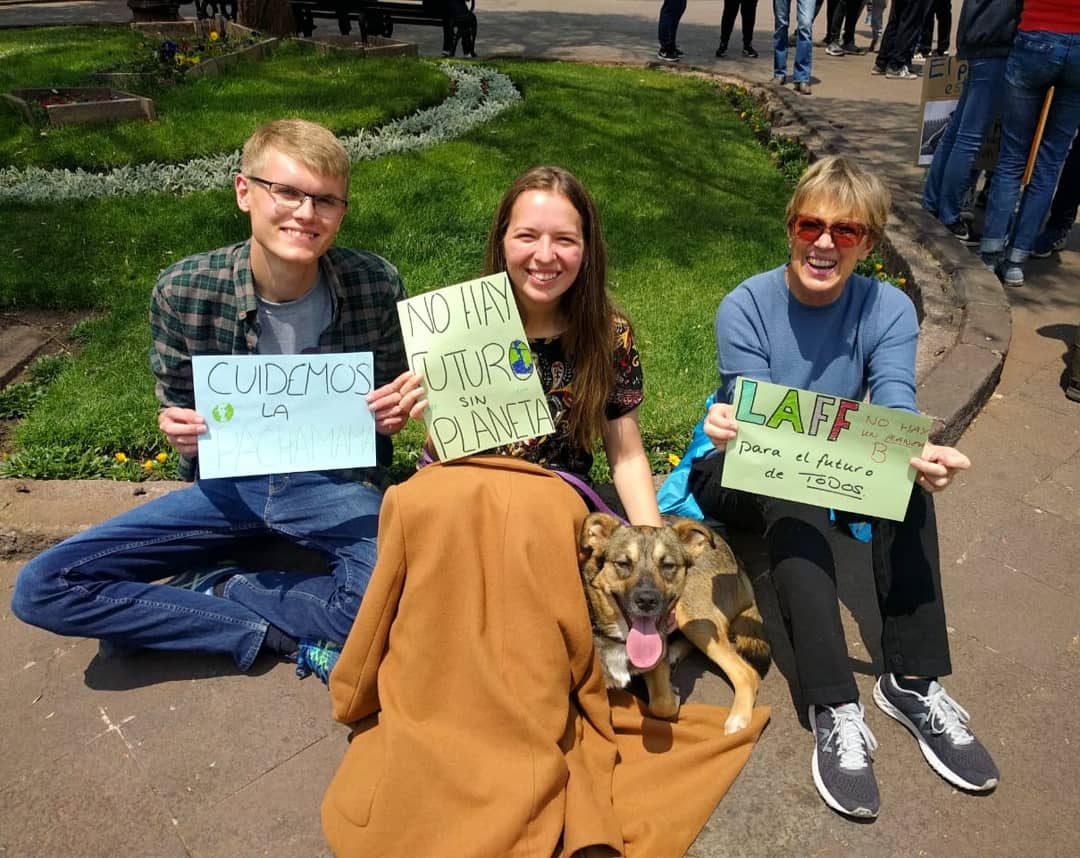
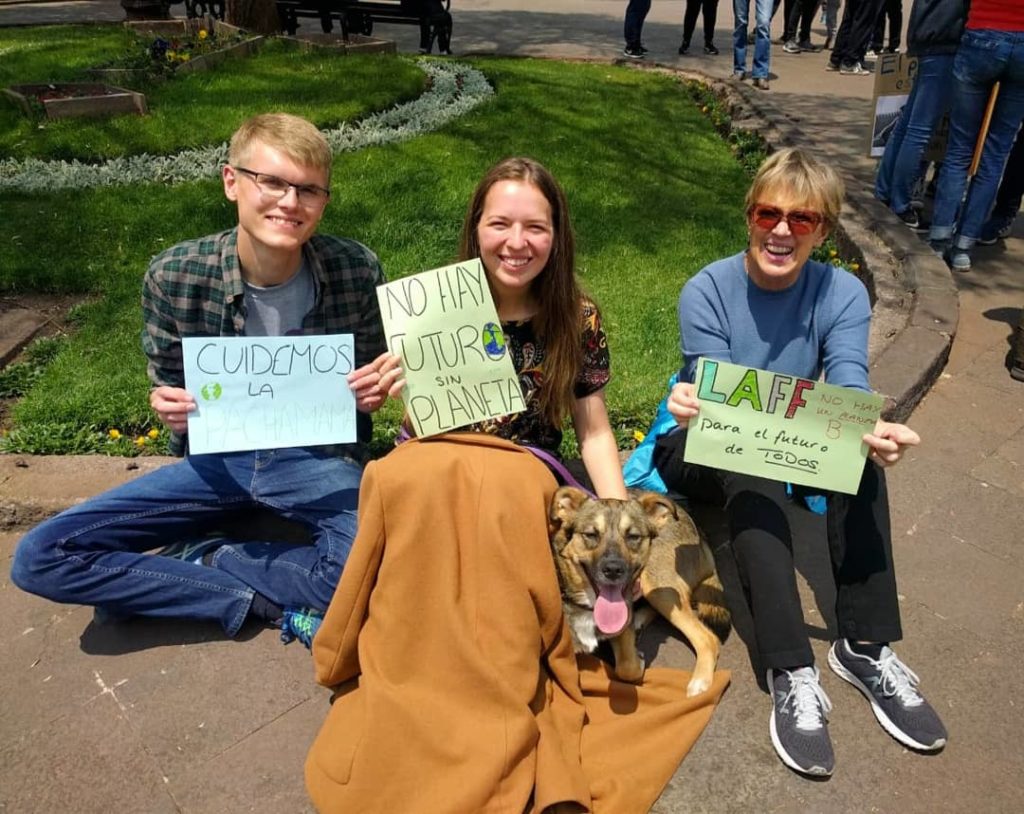
Every month at LAFF HQ we dedicate a Friday afternoon to a discussion or a debate in order to engage with wider issues outside of the office. Last Friday, we decided to be in keeping with #FridaysforFuture and discuss the pressing climate change emergency. We all hail from different continents so thought this would be a great opportunity to exchange insight and engage with the latest updates from various corners of the world. To see how our respective countries rated, we took a look at the Climate Action Tracker; an independent scientific analysis that tracks government climate action and measures it against the globally agreed Paris Agreement aim of holding warming well below 2°C, and pursuing efforts to limit warming to 1.5°C[1]. The ratings range from role model to critically insufficient, with most countries falling under insufficient (the UK and Australia came under this rating). Colombia is not included, China is ranked as highly insufficient, and the US comes in top with the worst rating possible: critically insufficient. 

So, why is the US ranked so poorly? Carla talked us through some recent developments. Rather than an impending dystopian nightmare, extreme climate change has already hit the US. Lakes like Hopatcong in New Jersey no longer freeze over enough for ice fishing or skating, there are more frequent and severe hurricanes, and many of the lower forty-eight states are approaching or have reached a 2°C temperature rise[2]. It’s only predicted to get worse – the Intergovernmental Panel on Climate Change (IPCC) forecast a temperature rise of between 2.5 – 10°F over the next century. It doesn’t help that current President Trump opposes climate policies and plans to pull out of the Paris Climate Agreement in 2020. Individual states are trying to implement their own plans, but with varying success. Trump is not making it easy for them. He recently denied California the ability to set higher energy efficiency standards for auto manufacturers compared to the rest of the states. The good news is that there has been a 40% decline in coal power generation over the last decade which accounted for 75% of the carbon emissions reduction in the US.  Lower natural gas prices and growth in the wind and solar industries are credited with this decrease in the dependence on coal.

Next, Marcela took a look at what’s happening in Colombia and on a larger scale, in South America. In Colombia, Rodrigo Botero (the director of the Foundation for the Conservation and Sustainable Development) carries out evaluations every 40 days in the Amazon and has confirmed that we are teetering on the brink of a crisis, where soon we will have a dry, deforested region without any vegetation[3]. Climate change in South America is particularly debilitating because it threatens to undermine the fight against poverty. It is undoubtedly the poorest members of society who suffer the most from natural disasters, food shortages, lack of water and other health risks that climate change can bring[4]. While politicians throughout the region have played an important role in larger international discussions, progress in countries is severely limited by many factors. These include accelerated urbanization, insufficient infrastructure for access to portable water and sanitation, economic instability, and excessive public debt[5].

Living in Cusco has been particularly interesting with regard to observing climate change in action. Peru is one of the most bio-diverse countries in the world and this makes it particularly vulnerable to the effects. Carla pointed out the difference in photos that she took at Lake Humantay five years ago compared to recent photos taken by other volunteers. In the past, the glacier extended from the mountain all the way down to the lake where as now, it is barely visible. During my stay here over the past couple of months, we’ve also seen an unprecedented number of wildfires – 142 were reported in Peru in July and August, with the majority (32) happening in Cusco[6]. The Amazon rainforest wildfires came to the world’s attention last month, but there has also been significant damage done to Paraguay’s Pantanal and four million acres of land destroyed in Bolivia since May[7] which has not garnered the same deserved media traction.

Lake Humantay 5 years ago
Lake Humantay October 2019

For Australia, Sim looked at the Liberal Government’s policies and to what extent they are compatible they are with climate change action. They have repealed the carbon tax (which had successfully reduced the CO2 production by 1.4% in 2013), reduced climate science funding, cut effective climate change programs and rejected expert advice of leading bodies. Rather than phasing out coal, they are investing in twelve new coal/gas projects with taxpayer funds. Their plan to reduce emissions by 28% by 2020 has little backing in policy. This approach means that heatwaves are becoming more common and severe, droughts are the worst on record, there are greater bush fires and the oceans are getting warmer and more acidic.

The mass bleaching of the Great Barrier Reef has already left 30% of coral dead and irretrievable. There is predicted to be an increase of 5°C by 2090 (which usually only occurs over the course of 5000 years). However, hope is not completely lost: real change is coming from state and local government as well as the general population. South Australia is leading the world in renewable investment, they have one of the largest solar panel fields and one of the largest lithium batteries worldwide. Victoria has banned fracking and is giving away free LED bulbs, and there has been over a 50% increase in sales for solar panels and water tanks since 2018. 

To follow, Meichen talked about climate change in China. China often faces intense criticism for its role in propagating global warming. However, while it is the world’s largest emitter of greenhouse gases in the apparel sector, 72% of this is for exports, so it is difficult to hold China solely responsible. In 2011, the government made huge progress with the initiation of a national plan which included halting the growth of coal consumption. However, due to economic slowdown and a trade war during late 2018, some of these restrictions on steel and cement were relaxed and coal consumption picked up again.

Water pollution is also a serious issue in China. 85% of the water in Shanghai’s major rivers was declared undrinkable in 2015 (and 56.4% was unfit for any purpose). This often stems from the demand for cheap goods in China – multinational companies ignore their suppliers’ environmental practises. A lot of water pollution can also be attributed to the South North Water Transfer Project. This project was originally pioneered by Mao to divert water from the Yangtze river as 80% of the water in China is in the south. This $79bn project hasn’t just been costly in the economic sense: it has caused endless environmental damage, wreaked havoc with marine habitats and caused the forced relocation of hundreds of thousands of people. As the project supplies over half the drinking water in Beijing, it looks unlikely to be abandoned any time soon.

Finally, we come to the UK. While this blog is being written, thousands of people are occupying various parts of London to demand that politicians tell the truth about the climate and ecological emergency. Over a thousand people were arrested in the first week of the protests[8]. This movement, Extinction Rebellion, was established in May 2018 in the UK but has since spread worldwide. The environmental activists are also demanding that the government must act now to halt biodiversity loss and reduce greenhouse gas emissions to net-zero by 2025[9]. This target is labelled as overambitious by some, as the official policy of the current conservative government is to reach net-zero by 2050.

To achieve this, the government will focus on pushing technology improvements like LED lightbulbs, hydrogen central heating instead of gas, and electric cars. Boris Johnson recently announced a £1.2bn fund for climate and endangered species, with £1bn of this dedicated to technological innovation[10]. Yet, ironically, they are still opening new coal mines, extending Heathrow airport and going ahead with fracking. Labour (the opposition party) recently came out to challenge them with their proposal to reach net-zero by 2030, in keeping with the Green New Deal Group’s suggestions (click here to read more about their principles and proposals). Although this would be an improvement, it still falls short of the action that Extinction Rebellion wants to see.

While it seems that the future is bleak, hope can be gleamed from civilian action and grass-root movements. From local governments and ordinary people who are taking it upon themselves to push forward change. Over 7.5 million people in over 180 countries have participated so far in the recent #FridaysforFuture climate strikes, and they’re not over yet. 

We need everyone to get involved and for this to happen, perhaps Greta Thunberg is right. We shouldn’t focus on hope. We need everyone to act as if their house is on fire – because it is.

Cambio Climático Alrededor Del Mundo

Cada mes en la sede central de LAFF, dedicamos un viernes por la tarde a una discusión o debate para abordar temas más amplios fuera de la oficina. El viernes pasado, decidimos estar en acuerdo con #ViernesParaElFuturo y discutir la urgente emergencia del cambio climático. Todos venimos de diferentes continentes, así que pensamos que esta sería una gran oportunidad para intercambiar ideas sobre las políticas y los últimos avances en nuestras respectivas regiones. Para ver cómo calificaron nuestros respectivos países, echamos un vistazo al Climate Action Tracker; un análisis científico independiente que rastrea la acción climática del gobierno y lo mide contra el objetivo del Acuerdo de París acordado a nivel mundial de mantener el calentamiento debajo de los 2°C y perseguir esfuerzos para limitar el calentamiento a 1.5°C[1]. Las calificaciones van desde ‘modelo’ a seguir hasta ser ‘críticamente insuficientes’, con la mayoría de los países cayendo en ‘insuficientes’ (el Reino Unido y Australia se clasificaron bajo esta calificación). Colombia no está incluida, China está clasificada como altamente insuficiente y Estados Unidos ocupa el primer lugar con la peor calificación posible: críticamente insuficiente.

Entonces, ¿por qué Estados Unidos está tan mal clasificado? Carla nos habló sobre algunos desarrollos recientes. En lugar de una pesadilla distópica inminente, el cambio climático extremo ya ha afectado a los Estados Unidos. Lagos como Hopatcong en Nueva Jersey ya no se congelan lo suficiente como para pescar o patinar sobre hielo, hay huracanes más frecuentes y severos, y muchos de los cuarenta y ocho estados más bajos se están acercando o han alcanzado un aumento de temperatura de 2°C[2]. Y va a empeor: el Panel Intergubernamental sobre Cambio Climático (IPCC) pronosticó un aumento de temperatura de entre 2.5 y 10°F durante el próximo siglo. No ayuda que Presidente Trump se oponga a las políticas climáticas y retirará del Acuerdo Climático de París en 2020. Los estados individuales están tratando de implementar sus propios planes, pero con un éxito variable. Trump no les está facilitando las cosas. Recientemente negó a California la capacidad de establecer estándares de eficiencia energética más altos para los fabricantes de automóviles en comparación con el resto de los estados. La buena noticia es que ha habido una disminución del 40% en la generación de energía de carbón en la última década, lo que representó el 75% de la reducción de emisiones de carbono en los Estados Unidos. Los bajos precios del gas natural y el crecimiento en las industrias eólica y solar se atribuyen a esta disminución en la dependencia del carbón.

Para continuar, Marcela echó un vistazo a lo que está pasando en Colombia y en América del Sur. En Colombia, Rodrigo Botero (director de la Fundación para la Conservación y el Desarrollo Sostenible) hace sobrevuelos cada 40 días en la región amazónica y confirma que estamos al borde de una crisis, donde pronto tendremos una región deforestada, seca, y sin vegetación[3]. El cambio climático en América del Sur es particularmente debilitante porque amenaza a socavar la lucha contra la pobreza. Sin duda, son los miembros más pobres de la sociedad los que más sufren los desastres naturales, la escasez de alimentos, la falta de agua y otros riesgos para la salud que el cambio climático puede traer[4]. Los políticos de la región han desempeñado un papel importante en las discusiones internacionales, pero el progreso en los países está severamente limitado por acelerada urbanización, infraestructura insuficiente para el acceso al agua potable y el saneamiento, inestabilidad económica y deuda pública excesiva, entre otros factores[5].

Mi tiempo en Cusco ha sido particularmente interesante para observar el cambio climático en acción. Perú es uno de los países con mayor biodiversidad del mundo y esto lo hace particularmente vulnerable a los efectos. Carla señaló la diferencia en las fotos que tomó en Laguna Humantay hace cinco años en comparación con las fotos recientes tomadas por otros voluntarios. En el pasado, el glaciar se extendía desde la montaña hasta el lago, mientras que ahora se ha derretido mucho. Durante mi estadía aquí en los últimos meses, también hemos visto un número sin precedentes de incendios forestales: 142 fueron reportados en Perú en julio y agosto y la mayoría (32) ocurrieron en Cusco[6]. Los incendios forestales de la selva amazónica llamaron la atención del mundo el mes pasado, pero también se han sido daños importantes en el Pantanal de Paraguay y cuatro millones de acres de tierra han sido destruidos en Bolivia desde mayo[7], que no ha ganado el mismo terreno en los medios de comunicación.

Lago Humantay hace 5 años
Lago Humantay en Octubre 2019

Para Australia, Sim analizó las políticas del gobierno liberal que están incompatibles son con acción del cambio climático. Han derogado el impuesto al carbono (que había reducido con éxito la producción de CO2 de 1.4% en 2013), recortó la financiación de la ciencia climática, redujo los programas efectivos de cambio climático y rechazó el asesoramiento de expertos de los principales organismos. En lugar de eliminar el carbón, están invirtiendo en doce nuevos proyectos de carbón/gas con fondos de los contribuyentes. Su plan para reducir las emisiones de 28% para 2020 no tiene respaldo en las políticas. Este significa que las olas de calor se están volviendo más comunes y severas, las sequías son las peores registradas, hay mayores incendios forestales y los océanos se están volviendo más cálidos y ácidos.

El blanqueamiento masivo de la Gran Barrera de Coral ya ha dejado el 30% de los corales muertos e irrecuperables. Se prevé un aumento de 5°C para 2090 (que generalmente solo ocurre en el transcurso de 5000 años). Sin embargo, la esperanza no se pierde por completo: el cambio real proviene del gobierno estatal y local, así como de la población en general. Australia del Sur lidera el mundo en inversión renovable, tiene uno de los mayores campos de paneles solares y una de las baterías de litio más grandes del mundo. Victoria ha prohibido el fracking y está regalando bombillas LED gratuitas, y ha habido un aumento de más del 50% en las ventas de paneles solares y tanques de agua desde 2018.

Además, Meichen habló sobre algunos temas de China. China enfrenta intensas críticas por su papel en el calentamiento global. Sin embargo, es el mayor emisor de gases de efecto invernadero del mundo en el sector de la confección, pero el 72% de estos son para exportaciones, por lo que es difícil responsabilizar a China únicamente. En 2011, el gobierno hizo grandes progresos con el inicio de un plan nacional que incluía detener el crecimiento del consumo de carbón. Sin embargo, debido a la desaceleración económica y una guerra comercial a fines de 2018, algunas de estas restricciones sobre el acero y el cemento se relajaron y el consumo de carbón se recuperó nuevamente.

La contaminación del agua también es un problema serio en China. El 85% del agua en los principales ríos de Shanghai se declaró no potable en 2015 (y el 56.4% no era apto para ningún propósito). Esto a menudo se deriva de la demanda de productos baratos en China: las compañías multinacionales ignoran las prácticas ambientales de sus proveedores. Una gran cantidad de contaminación del agua también se puede atribuir al Proyecto de Transferencia de Agua del Sur al Norte. Este proyecto fue originalmente promovido por Mao para desviar el agua del río Yangtze, porque el 80% del agua en China se encuentra en el sur. Este proyecto de $79 mil millones no solo ha sido costoso en el sentido económico: ha causado un daño ambiental interminable, ha causado estragos en los hábitats marinos y ha provocado la reubicación forzada de cientos de miles de personas. Como el proyecto suministra más de la mitad del agua potable en Beijing, parece poco probable que se abandone pronto.

Finalmente llegamos al Reino Unido. Mientras se escribe este blog, miles de personas están ocupando varias partes de Londres para exigir que los políticos digan la verdad sobre la emergencia clima y ecológica. Más de mil personas fueron detenidos en la primera semana de protestas[8]. Este movimiento, Extinction Rebellion, se estableció en mayo de 2018 en el Reino Unido, pero ahora se ha extendido por todo el mundo. Los activistas ambientales también están exigiendo que el gobierno actúe ahora para detener la pérdida de biodiversidad y reducir las emisiones de gases de efecto invernadero a neta nula para 2025[9]. Algunos señalan que este objetivo es demasiado ambicioso, porque la política oficial del actual gobierno conservador es alcanzar emisiones netas nulas en 2050.

Para lograr esto, el gobierno se centrará en impulsar mejoras tecnológicas como bombillas LED, calefacción central de hidrógeno en lugar de gas y autos eléctricos. Boris Johnson anunció recientemente un fondo de £ 1.2 mil millones para el clima y las especies en peligro de extinción, con £1 mil millones de este dedicado a la innovación tecnológica[10]. Sin embargo, irónicamente, todavía están abriendo nuevas minas de carbón, extendiendo el aeropuerto de Heathrow y siguiendo adelante con el fracking. Labour (el partido de la oposición) recientemente salieron a desafiarlos con su propuesta de alcanzar emisiones netas nulas para 2030, de acuerdo con las sugerencias del Grupo Green New Deal (haga clic aquí para leer más sobre sus principios y propuestas). Esto sería una mejora, aún no es la acción que Extinction Rebellion quiere ver.

Aunque parece que el futuro es sombrío, podemos ver la esperanza en la acción civil y los movimientos de base. En los gobiernos locales y la gente común que están perseverando para el cambio que necesitamos. Hasta ahora, más de 7.5 millones de personas en más de 180 países han participado en las recientes huelgas climáticas #ViernesParaElFuturo, y aún no han terminado.

Necesitamos que todos se involucren y para que esto suceda, tal vez Greta Thunberg tenga razón. No debemos centrarnos en la esperanza. Necesitamos que todos actúen como si su casa estuviera en llamas – porque así es.


[1] https://climateactiontracker.org/
[2] https://www.washingtonpost.com/graphics/2019/national/climate-environment/climate-change-america/
[3] http://todoesciencia.gov.co/cambio-climatico-en-colombia
[4] http://onu.org.pe/temas/medio-ambiente-y-cambio-climatico/
[5] http://cinu.mx/minisitio/cambio_climatico/las_huellas_en_america_latina/
[6] https://andina.pe/ingles/noticia-peru-142-wildfires-reported-between-july-and-august-764713.aspx
[7] https://www.bbc.com/news/world-latin-america-49971563
[8] https://www.theguardian.com/environment/2019/oct/10/extinction-rebellion-protesters-arrested-at-london-city-airport
[9] https://rebellion.earth/the-truth/demands/
[10]https://www.theguardian.com/politics/2019/sep/22/boris-johnson-unveils-12bn-for-climate-and-endangered-species

LATIN AMERICAN FOUNDATION FOR THE FUTURE
LAFF, 22 Highfield Lane, Dewsbury, UK, WF13 4BQ +51 942761264 [email protected]